Southern Movie 66: “The Chase” (1966)
The Southern Movies series explores images of the South in modern films as well as how those images affect American perspectives on the region.
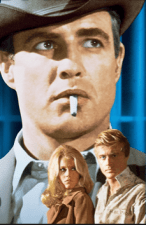
Set in an unnamed small town in Texas with more than its fair share of beautiful people, this film offers a lurid and drunken story fraught with sex and infidelity, backstabbing and revenge, money and power. Probably the best brief description I’ve found comes from a New York Herald-Tribune review that appears on TCM’s webpage for the film: “it was a mishmash of Peyton Place sociology, Western mythology, and Deep South psychology.” Directed by Arthur Penn and starring Marlon Brando, Robert Redford, Angie Dickinson, Jane Fonda, Robert Duvall, and more, the story was written by Horton Foote, the Pulitzer Prize-winning playwright who adapted To Kill a Mockingbird. This version was adapted for the screen by Lillian Hellman, who wrote The Children’s Hour and Little Foxes. In this one, which is equally full of intrigue, there are two things that everyone in the town wants to know: where is Bubber Reeves, and what will he do now that he has escaped from the prison farm?
The Chase opens with a heavy stylized treatment of two escaped convicts being pursued by the police and by ordinary citizens. At first, these visuals come in pairings of oncoming headlights or colorized imagery of oil refineries alongside the silhouettes of two men running. These images then become clearer as armed men and police sirens replace the vague images. After a few moments, the events become clearer, and we see two men in white prison garb running through the woods in dim light as men with rifles take aim at them.
In the light of day, a car pulls up to where one of the two convicts is lying face down by the roadside. The man appears to be an ordinary citizen, wearing a suit and hat, and from his behavior seems to have no idea that he is approaching an escaped convict. This one by the roadside (Robert Redford) is the bait, and he quickly throws the unsuspecting motorist into a ditch where the other convict begins to violently assault the man. The first convict then jogs over to the car, which they obviously plan to steal, and when he returns, he finds that his partner-in-crime has killed the motorist. The man’s head is bloody from having hit a rock. We see from the first convict’s reaction that he had not intended for the victim to be killed, then he looks up to find something else that he had not expected. His partner has taken the man’s coat and is driving off in the car, leaving him stranded with a dead body. This is Bubber Reeves, and though breaking out of the state prison farm was one thing, this is a whole new predicament.
In a brief scene that follows this initiating sequence, we see one of the instances in the film where the issue of race is brought to our attention. As Bubber Reeves is running after the stolen car, an older black woman with a young boy in her jalopy pass by on the same two-lane road, and the boy gawks at what he sees, imploring the old woman to notice and take action. She tells him twice to look away, that white people’s business is nothing he should get involved in. He looks dismayed at what he witnesses, at what he is being told, and at the combination of the two.
Meanwhile, all the Bubber Reeves can do now is wash the blood from his hands in a mud puddle. He will be presumed to be the murderer.
In town, at the courthouse, the phone is ringing. Two unnamed men have come into the sheriff’s office, where the deputy named Slim is lounging. He gets up to answer the phone, then calls for the sheriff (Marlon Brando) to take the call. We get a sense here of the slow pace of the town: the sheriff is polishing his saddle, and his wife (Angie Dickinson) is ironing clothes next to him. We also understand that the couple lives in a small apartment attached to the office. At first, Sheriff Calder doesn’t want to take the call, but he does so reluctantly. Then, he gets the news: Bubber Reeves has escaped from the state prison farm. We only hear one side of the conversation, but we understand it. Yet, the controversy is about to grow. The two men who entered the office are eavesdropping, and after leaving, they immediately take the news outside into the street, where it is passed from mouth to ear quickly and repeatedly. Amid this passing of the news, the sheriff comes out and one of the men named Lem (Clifton James) begins to harass the sheriff with an anecdote about a past situation with a man’s airplane, but the sheriff shrugs him off the effort with classic coolness.
Yet, one of the recipients of the news about Bubber is the real estate agent Briggs, whose office is right across the street from the courthouse. We quickly figure out that Briggs is a busy-body and we will soon find out that he is a pot-stirrer. However, right now, our attention is shifted to other matters of his character. After hearing the news about Bubber Reeves, Briggs wanders back into his small office where an older black man is waiting. This is another of the movie’s scenes that address the issue of race. It seems the black man is behind on his mortgage, and Briggs wants to buy him out, offering his $500 for his farm. The man is smiling and somewhat jovial, but his friendly demeanor is a mockery of Briggs. He notes that, without land, a man has nothing, and thus declines the offer of a purchase. Briggs takes the refusal in kind but adds some remarks that he may be a lot of things, but dishonest is not one of them. With a smile, the black man agrees as he is leaving, Oh yes, you are definitely a lot of things, but you are also honest.
From there, the story takes a hard shift into the Texas oil fields. A rig is pumping, and a handful of men are working there. One among them is obviously the corporate type, a young man with perfect hair and a stylish black suit. He is Jake Rogers, the son of local tycoon Val Rogers. The workers are telling him that there is no oil there, but he insists that, if his father says there is then there is. With that, he goes to his fancy car and drives away, leaving the fruitless work to continue. As he leaves, we see a sign that will recur throughout: Val Rogers Properties. His next stop is at a cluster of tiny houses, where a few dozen Hispanic men are being loaded into flatbed trucks. Their work in the fields is done, and they are being removed from the property. The Hispanic men are protesting, calling Jake ugly names, but the site foreman tries to cajole them onto a truck and appease the young executive’s conscience at the same time. A casual conversation between the Hispanic foreman and Jake comes next, and Jake is smug and unappreciative of the other man’s overt attempts at friendly banter. As he drives away, the foreman’s wife remarks about Jake’s wife, that she is pretty and that they will have many sons. Jake looks unhappy with her suggestion, and then we see why.
Jake’s car pulls up in front of a shoddy building called Sol’s Cafe, and a pretty woman (Jane Fonda) come out of a second-floor apartment and stands on the stairs. She holds up seven fingers to him, and he shakes his head no and replies by holding up ten fingers. We understand this to be the time of their rendezvous. They blow each other kisses, and Jake drives away. Sol, the proprietor of the cafe, has been watching all this from the window. He comes out and asks the young woman, Anna, if she is going to work in the cafe this weekend. No, she won’t be. The tension is palpable, and their conversation only hints at why. First, Jake is married, and so is Anna— she is Bubber Reeves’s wife. Second, Sol says that he should know where Anna is and what she is doing, because he is her father; she retorts that he isn’t. Sol married Anna’s mother, who is obviously gone now, so Anna feels no allegiance to him. She laughs off his attempts at control. But he has cards up his sleeve. He wants her out when Bubber gets out of prison, but Anna won’t leave until Sol pays her for her mother’s half of the business. Acknowledging that he is unable to produce that kind of cash, he makes reference to an amount of money and that he thinks he might know where it was hidden. Anna’s tone then changes and alludes to fatal consequences if he even tries it.
As the plot unfolds, Sheriff Calder goes to visit Bubber Reeves’ mother. She is an anxious woman whose behavior and tone show that she dominates her silent, distant husband. This is a small town, after all, and her son is a repeat offender who is now in prison. She is immediately defensive when Calder comes to her door. He tells her that Bubber has escaped, and she appears genuinely surprised, while her husband, who is in the yard, scowls silently nearby. We can see in her face the desperation of a mother who will do anything for her son, and when she closes the door on the sheriff, she begins to ask out loud what she has done wrong.
If all of this were not complicated enough, the town’s bank offers up several more aspects to this complex scenario. First, we meet Edwin Stewart (Robert Duvall), the uptight bank vice-president whose office is out in the lobby among the tellers. His wife Emily comes parading in, and she is his opposite. Clearly full of joi de vivre, she wreaks of sexuality, scandal, and mischief. She comes in wanting to know from Edwin why they were not invited to Val Rogers’ party that night. Edwin tries to blow her off, but she is persistent. Then the other VP Damon Fuller appears with a tray full of champagne. He is handing it out when Val Rogers – the actual guy, from the sign – emerges from his office. Damon announces a happy birthday to their boss, and all raise a glass to him. Val appears unimpressed and thanks them with too much restraint to be sincere. Emily speaks to him, alluding to the party they have not been invited to, but Val brushes her off easily then leaves. Getting nowhere with first Edwin then Val, Emily moves closer to the executive offices into the office of Damon Fuller, which is behind a small hedge-like planter. There, she attempts to entice him, and we understand that the two are having an affair behind his alcoholic wife’s back. Damon is clearly nervous and wants her to be more coy here, even tries to avoid her, but she persists. Her husband is nearby after all.
After Emily has finished with her shenanigans, at least for the moment, she sits down at Edwin’s desk and tells him that Bubber Reeves has escaped from prison. At first, Edwin takes the news glibly, even chuckling about its potential for ruffling a few feathers in town. Then, Emily remarks that maybe he should be frightened. Now, she has Edwin’s attention. His tone goes serious, and he alludes to something that we do not yet know, something he told her in confidence. Well, she explains, she actually took that secret and shared it publicly . . . in Bubber Reeves’ presence. And Bubber was not amused. We don’t know yet what Edwin has done, but we know that it was done on the sly and we know it isn’t good.
 At this point, The Chase has just passed the twenty-minute mark, with more than three-quarters of the film to go. This is a microcosm where the antagonisms are deep and the intrigue is multifaceted and constant. Though the issue of race has been mentioned, it is barely a factor in this Southern small town’s drama. As the drama among the white people goes on, almost no black people are even seen, though we have gotten small tastes of the effects of racism, and we have also gotten one glimpse of the dehumanization of migrant workers. Among the town’s white citizens, we so far see a variety of moral shortcomings: gossip, disrespect, lying, infidelity, backstabbing. The characters are abject moral failures, which is particularly interesting considering that we’re watching the people of a small Southern town where church and religion are basically nonexistent.
While all of that is going on, Bubber Reeves is running around in the woods, evading the law. To watch him, Bubber doesn’t seem like such a bad guy, certainly not the man to be feared that we hear about in the town. For now, he is hopping a train, scuttling among the tracks to find an open car. He does find one but gets locked into what turns out to be a refrigerated car.
To add to the chaos, a whole bunch of cars roll into town for a dental supply salesmen’s conference! We had seen this sign on the hotel earlier in the film, but now they have arrived. The men park all out in the street and arrive in a gaggle. Some local teenagers who are hanging out on the square tease them a bit, and the salesmen tease them back. Here, we also meet another minor character who will reappear: the little church lady who walks around with her Bible, injecting herself into situations where she isn’t wanted, including this one. She is virtually the only shred of evidence that the Christian religion exists in this town. She is goofy and can’t be taken seriously, and the salesmen easily move her right along.
Nearby, Sheriff Calder is knocking on Anna’s door above the cafe. Sol hears him and comes outside but apprises the sheriff that she won’t be around until Monday. Calder is thinking that Bubber might be coming looking for his wife as he avoids capture. However, we see that Bubber is actually not trying to do that. We find him in that chilly train car, but he finds a way out, climbs over the top of several cars, and swings himself into a car where three Hispanic people are riding. They see his prison-issue clothes and are frightened. But Bubber only wants to know that the train is heading south, presumably into Mexico. After a few attempts at bridging the language gap with hand gestures, he learns that he is actually heading north . . . further into Texas! So, he jumps the train and makes his way across open fields. By now, he is getting hungry and imagines himself shooting a goose passing by. With nowhere to go and nothing to eat, all he can do is keep on moving and hoping.
While poor Bubber Reeves is starving out in the boonies, Edwin Stewart is in town fretting over what will happen to him if Bubber comes back. Briggs stops him in his car and alludes to the yet-unnamed secret that Edwin’s wife Emily brought up. This has Edwin spooked. He goes to the sheriff, who is trying to get dressed for Val Rogers’ party, which he does not want to go to. His wife Ruby is dressed up in a beautiful green dress, and when he asks where she got it, she tells him that Val Rogers gave it to her and that it is a $1,000 dress. Calder really doesn’t like it now. And it is during all of this that Edwin arrives, wanting to talk to him. Calder is already irritated but agrees to hear the man out. At first, Edwin lies, saying that his wife is scared and wants a deputy as security, but Calder replies that the request isn’t feasible. Then, Edwin eases into the truth. He begins to tell Calder how Bubber was sent to reform school for the first time for stealing $50 from the grocery store where the two of them worked as boys. In reality, Edwin had stolen that money, but he stayed quiet and let Bubber take the heat, since everyone knew Bubber to be a wild child anyway. Years passed, and Edwin admitted this to wife, who then let the cat out of the bag. Edwin now feels that Bubber will take revenge on him, if he were to return. After Edwin leaves, Calder wants Ruby to take off the fancy green dress and wear the older one that he gave her. She agrees.
After we see Bubber running, exhausted and hungry, across rice fields in the sunset, the film carries us to Val Rogers’ opulent birthday party. The men are in black tie, and most of the women are in gowns, expect a few who wear bedazzled cowboy costumes. For some of the scene, people are having a good time, eating, celebrating, dancing, even acting silly. In other portions of the scene, we have serious conversations between characters. Here, we meet Jake Rogers’ wife, a pretty woman who he does not love and who does not love him. His father Val asks them to dance so he can see them happy together, but they only discuss their side relationships and how they don’t want to be together. Val Rogers also goes to sit down with Calder and Ruby, and he notices that Ruby is not wearing the dress he bought. Ruby explains that Calder is a proud man whose pride was hurt by the large gift. Val seems to understand but continues to push Calder into a position where he does Val’s bidding for higher and higher prices. Calder is offended by the idea of being bought and paid for, and though Val Rogers takes this well, he doesn’t appreciate it. These moments show the film’s commentary on social class, how being rich does not mean being happy. Val Rogers may have his name on so many buildings and plots of land in town, but there are things that even he cannot buy.
The party is disrupted when Sheriff Calder is given the news that Bubber Reeves has been spotted in the Mexican section of town. (We can’t imagine where that would be, since the only Mexicans we have seen were put on trucks and forced to leave.) Jake takes off to leave the party, with his father hollering after him, because the young man knows that Bubber will certainly be looking for his wife. Val Rogers is confused by the rush, then turns his attention to Calder who is leaving as well. Though the lawman is leaving because of Bubber, his concerns are not the same as Jake’s. On his way to the car with Ruby, Calder shouts at the sheriff about owing him. Calder reminds Val Rogers that he is not man who will be bought and sold. All in all, the wealthy older man is baffled at his inability to control these situations, and because at this point he does not know that his son is having an affair with a convict’s wife. On the car ride back to their apartment in the courthouse building, Ruby wonders out loud what Val Rogers will do when he finds out about Jake’s affair and Calder wonders out loud what the two of them were doing there in the first place.
Across town, Briggs and his wife are taking a casual stroll in the evening. They come to the Reeves’ home where Bubber’s parents are sitting silently on the porch in the dark. Briggs takes the opportunity to jibe them in his passive aggressive way, while his own wife looks on. He remarks loosely that Bubber was never mean, just wild, though if he finds out that his friend is sleeping with his wife, he might get wilder. At this, Mrs. Reeves gets up stoically to walk inside, and as she does, Briggs takes one more chance at her; he offers to be their broker if they ever want to sell their house.
Back at the courthouse, the phone is ringing, and Calder takes the call. He learns about the man who was killed and tells the person on the other end that he’ll try to find out what happened. After hanging up, he tells his deputy that he doubts Bubber would kill someone.
Now, this complex plot is ratcheting up. The scene carries us to a drunken party at Damon Fuller’s house. The first thing we see is Damon’s drunk wife trying to make it down the stairs without falling. In the living room, pairs of well-dressed people dance and make out. (Though the partygoers are all adults, some middle-aged, there are no children in sight.) Damon is there, dancing with Emily, and his wife tries to butt in. Edwin sits by the radio, appearing irritable, and they figure out that he is trying to hear of news about Bubber. Next door, a similar party is going on where the teenagers are also dancing. Then the adults at Damon’s house start acting wild and silly, egged on by Emily’s jabs at her husband about Bubber, and the whole thing culminates in Lem firing his pistol in the air. Then, Briggs ambles by to say passive aggressive things to these people, too. Soon, Calder rides up, swaggers over, and exchanges some tense words with Damon. The local bourgeoisie gathered there are all drunk by now, and are ready to be belligerent, which we see by the condescending attitude toward the sheriff, who is trying to track down an escaped convict.
Nearby, Jake is going to see Anna at the motel. She thinks he is arriving for their tryst, but he has come with news: Bubber has escaped and has been spotted in town. At first, Jake leads on that everything is normal for them, then he shares the word about Bubber. Here, the two are at a crossroads. Will Anna’s allegiance be to her husband who is an anti-hero with no future or to her married lover who is his father’s pawn? The two talk with some intensity about her choice, and she knows that she has got to find Bubber, to help him. Jake does not want her to do that, but ultimately yields – knowing his place in this situation is precarious – and goes with her, ostensibly to help.
And Bubber is very close. We see him in a junkyard at night, where he is sneaking among the cars and calling after the yard’s black proprietor Lester. They talk in low voices, and Bubber asks Lester for a car or money, but Lester asks Bubber to leave him out of the trouble. Bubber then alludes to a situation in the past where he “took a rap” for Lester and thus owes him a favor. Lester concedes, but reminds the escaped convict again that he has nothing, only cars that don’t run and the “four bits in my pocket.” Then Lester must go seek help from Bubber’s wife. Lester asks, “Can you trust her?” Bubber wants to know if there’s a reason that he shouldn’t, and Lester reluctantly shrugs off his own suggestion. He will go to Anna and get Bubber some money and some clothes.
Back at Damon’s party, everyone is watching TV to learn more about the murder. Lem is drunk and starts claiming to know the victim, which is absurd since he said earlier that he’d never heard of him. Then a girl outside starts hollering, “Help! Help!” Damon, Lem, and another man named Archie go running outside, and the girl claims to see Bubber Reeves! They take off after the accused man, and it is a black man simply walking down the street. Damon tries to laugh it off, but the black man is offended that Lem has his pistol in his hand. Damon advises the black man to forget it and move along, but he won’t let it go. Lem tells him to go walk where he belongs, and the pedestrian asks if theirs is a white street for white people. Now, the three drunk white man see a fight where the odds are in their favor. This is their opportunity to take out their antagonistic tendencies on a hapless victim, and they prepare to disabuse the man. Just then Calder pulls up and breaks up the scene. This is the third brief instance where race is brought up as an issue in the story, but its insertion seems just as random as the first two. However, its import will grow momentarily. We hear from the crowd’s banter that they are heading to Sol’s Cafe, which is also where Lester is heading to find Anna.
The next two scenes develop two subplots within the story. First, we see Jake and Anna at an old burned-out wreck of a house. She thinks that Bubber might have come to where they once lived, but he isn’t there. The couple talk for a few minutes about Bubber and what should happen next. Across town, we encounter the elder Reeves couple again. Mrs. Reeves is accosted by the little church lady with her Bible, but Mrs. Reeves escapes by going upstairs and leaving the do-gooder in the dark parlor. There, Mr. Reeves finds out that his wife intends to sell their house, cashing out their life savings to help their son. Here, we see a sad conflict between a desperate mother who is ready to go too far and her hopeless husband who understands that their son is beyond help.
Over at Sol’s Cafe, the rowdy crowd of middle-class drunkards are there when Sol hears the footsteps above that tell him Anna is home. The crew of local wannabe vigilantes takes this as their cue to aid in the capture of Bubber Reeves and go outside. But instead of Anna, they see Lester, who has come on Bubber’s errand. The frightened black man is trapped on the landing outside her apartment door with four white men standing at the foot of the steps. When they realize that it is not who they expected, they want to know why a black man is a visiting a white woman as such an hour of the night. Lem tries to escalate the situation with racialized threats, but Damon is taking it in another direction. He tells Lester to put his knife away – the man doesn’t have one and says so – and Damon goes for his pistol as he ascends the stairs. Lester then jumps from the second-story landing, the four white men go after him, with Damon firing shots into the dark. But who is in the alley waiting for them? Calder. He breaks up the situation and puts Lester in the car. As they leave, one of them remarks that Lester had some trouble with Bubber Reeves years ago.
In the car, Calder wants to know where Bubber is, but Lester claims not to know. Without that information, Calder tells Lester that he is going be locked up— for his own protection. At the courthouse, Calder gives Lester the keys and tells him to lock himself up downstairs, then he tells his deputy Slim to go on patrol, which leaves Calder in the office alone. What we have seen, but which Calder has not, was Briggs standing across the town square, taking note of Lester and Calder going in. Once Calder and Ruby are alone in the office, he remarks that some people are” just nuts,” and adding, “I had to lock a man up, who didn’t do a damn thing, just to keep those maniacs from killing him. They’re not interested in doing anything but getting drunk and making trouble. I’m sick of it.”
To make matters worse, Edwin has gone to Val Rogers’ party to tell him Jake’s secret. He interrupts the party, which is winding down, and stammers a bit before spilling the beans to his irritated boss. Edwin chuckles as he reveals the news of Jake’s affair to his father, making the situation grotesque. Because we know what Edwin has done to Bubber years ago, and because we know that Edwin is frightened of revenge, we also know what Val Rogers does not: that this coward is using a powerful man’s love for his son to buffer himself from facing the consequences of his own acts.
As The Chase reaches the one-and-a-half hour mark – with about forty minutes to go – it is well into the night, and the commotion is building to a fever pitch. We’ve got Val Rogers off looking for a wayward son, who believes may get killed for having an affair with an escaped convict’s wife. We’ve got the violent trio of Damon, Lem, and Archie, who are drunk and armed and looking for trouble. We’ve got carloads of wild teenagers and a passel of dental supply salesmen, who are all running around town and looking for a good time. We’ve got Jake and Anna, who are searching for Bubber to save him. And we’ve got Calder, who is trying to rein it all in. Generally helpless but definitely involved in all this are Ruby, Lester, and . . . Bubber!
From this point forward, the shit hits the fan as Calder loses control of the town. Law-and-order goes out the window, and mob rule takes over. And not just one mob, but several.
The breaking point occurs when Calder tries a maneuver to end the situation quietly and peacefully, kind of like he did by bringing Lester to jail. When he encounters Jake and Anna in front of the courthouse, he invites Anna to go talk to Lester. He knows that this has something to do with Bubber, that Lester did not just go by Anna’s apartment to say hello at that hour of the night, and he offers her a chance to go downstairs and get the message. When she emerges and attempts to leave the office quickly with Jake, Calder stops her to say that she has an hour to bring Bubber in. She bristles at the suggestion, and ultimately balks at it. Calder knows what will happen, but she will not accept it. Bubber will either return to jail or be killed in the town. The news of the murder put alongside Bubber’s criminal history has every half-witted, half-cocked fool in town believing himself to be the arbiter of justice. The drunkards at Damon’s party had offered to be deputized that night, but Calder had assured them they were not law-enforcement material.
But Calder’s cool head won’t prevail. Outside, Briggs is telling those same drunkards what he has seen. The crew – Damon, Lem, Archie, and others – has pulled up on the town square in their night-long search for excitement and fun, and they have encountered Briggs, who tells his version of who he has seen coming in and out of the courthouse. Meanwhile, Mr. and Mrs. Reeves arrive as well. Mr. Reeves sits down outside, and Mrs. Reeves goes inside. She is there to offer Calder a bribe to help her to save her son. He rejects her proposal, of course, and seeks Ruby’s assistance in calming the old woman down. Eventually, the overprotective mother loses her faculties and goes outside weeping wildly and proclaiming that Calder plans to kill her son. Who sees this but Briggs, Damon, Lem, Archie . . . all the people who don’t need another reason to get involved.
The breakdown of all norms and decency occurs next. Val Rogers comes into the courthouse wanting to talk to Lester about where Bubber Reeves is. Calder tries to stop him but the three troublemakers have also come in to see what’s up. They gang up on him, yielding to Val Rogers’ insistence that they hold Calder while he goes downstairs to the cells. The trio then lock Calder in his office, lock Ruby out, and beat the hell out of him. Ruby then tries to run downstairs to appeal to Val but he has locked himself in the cell with Lester, and has pulled out a gun and is pistol-whipping Lester repeatedly. During the beating, Ruby runs outside to call for help, but the assembled crowd stands silently and stares. The beating ends when Lem finally pulls Damon off of Calder, saying that he will kill him if he doesn’t stop. The three then run downstairs but Val Rogers is gone. Lester is alone in the cell. The only thing left to do is run out into the street and go find Bubber themselves.
Now, Calder has been beaten up horribly. His face is swollen and battered. His shirt is covered in blood. Ruby tries to get him to stop for medical treatment but he isn’t hearing it. He stumbles out the front door, where a stunned and expectant crowd stares at him, moot, as he stumbles and falls. We see now that Calder does not have the support of the people he protects. No one moves to help him. These small-town Southerners are neither compassionate Christians, nor hospitable neighbors. Among them is Briggs, who appears to be seething with hatred for the injured man he watches.
Back at the junkyard, Anna finds Bubber among the wrecked cars. She embraces him, and they talk for a moment before Jake shows himself. At first Bubber does not realize what is going on, then it becomes clear. He takes it well and accepts that his future is not with Anna, that his wife and his friend have moved on — together — in his absence. All he wants now is transportation, clothes, and money, all of which he needs in order to escape.
After this scene of quiet emotion and confessions, we hear Val Rogers calling to them. He believes that his son Jake is in danger, that Bubber has him and will hurt him. The truth is obscured from the wealthy old man: his son is hiding from him and is choosing his lover and his friend over the father who wants his love so badly. They want to help Bubber escape. Once again, this man who believes that he controls everything could not be more lost.
The final twenty minutes of The Chase are an absolute shit show. Every character we have seen shows up at the junkyard. First, Damon, Lem, and Archie arrive, though Val Rogers begs them to leave because he thinks he is making headway in his effort at diplomacy. After them comes everyone from the local hot rod teenagers and the dental supply salesmen to Calder and Slim and the onlookers from the town square. In this wild final scene, people begin throwing flares and Molotov cocktails among the old cars. Fires break out as people scream and try to start their own brand of trouble. Amid all of this, Jake, Anna, and Bubber scramble to escape, but Jake is injured and quickly dies. Anna and Bubber are left to make an escape attempt but hey are discovered by Damon, Lem, and Archie, who try to capture and lynch Bubber. They are thwarted, though, by Calder. The sheriff takes the convict into custody and will drive him back into town.
One might think that the story is over that the point, but it isn’t. In town, the assembled crowd has beaten them there to see the bloody sheriff escort his man up the courthouse steps. Mrs. Reeves is waiting, and she tries to assure Bubber that she has the money to get him a good lawyer this time. But her son won’t even look at her. The story ends with a surprise, though— out of nowhere, Archie, the drunk antagonist who has barely spoken, appears with a gun and shoots Bubber dead. Calder’s face shows his complete shock and dismay. He has gone through so much to bring this man in alive, and Archie has just flushed it all down the toilet. Completely at the end of his rope, Calder jumps on Archie and kicks his ass in front of everyone. The next morning, as a lone janitor sweeps up the littered town square, Calder and Ruby are packing the car to leave town forever.
If you’ve read this far, consider showing some love.
The Chase is a complicated thriller that examines the small-town culture of the South by highlighting issues of social class, race, sexuality, family, and the law. The story has so many shoots and tendrils that solutions to all of the story’s problems cannot occur: addressing one problem only opens the door for another problem. In its review of the film, Variety magazine called the town “sociologically sick,” while also pointing to the fact that Lillian Hellman had changed the plot of Horton Foote’s novel significantly, adding some of the characters herself. Likewise, The New York Times‘ Bosley Crowther wrote, “The screenplay is overheated, the emotional content, the pictorial style, the directing, the acting, the fist-fighting, the burning of a junkyard at the end—everything.”
But this “overheated” story is supposed to support an idea of what the South is like, was like, and should be regarded as. As a document of the South, though, The Chase misses the mark in too many ways. First of all, the downtown and neighborhood look more like back-lot movie sets than like a Southern small town. Beyond that, there really were singular individuals – very rich men – who owned small towns and operated them like little fiefdoms, but Val Rogers is certainly unique among them, having a tuxedo ball for a birthday party, during which he announces the construction of a college for their town. If this was the mill town that the imagery portrays, Val Rogers wouldn’t be in favor of anyone but his own son going to college. And despite the fact that many Southern small towns are not actually idyllic and wholesome, like Mayberry is in The Andy Griffith Show, this treatment of widespread infidelity is somewhat accurate but way too sophisticated— for example, where are all the children that would result? This was a time before birth-control pills, and for folks who are all mixed up in trysts, there certainly is a distinct absence of babies who kind of look like the guy down the street. I don’t see any little ones wondering why Mommy’s friend didn’t bring them a present when he stopped by to see Mommy while Daddy was at work. While this scene is wild, it’s also a little too tidy to be realistic.
This film is not without its subtleties, though. We cannot fail to notice the Hollywood touch that the (white) good guys are not racists, while the (white) bad guys are. We find out early in the film that Briggs is a racist who cheats black landowners, and we see Damon, Lem, and Archie try to gang up on a single black man twice. We also have Sol, who appears to want to participate in attacking Lester when he is trapped on Anna’s landing. Who stands in their way both times? Calder, who makes an anti-racist statement after putting Lester in the jail cell as a means of protecting him. We also have Bubber, a repeat offender and suspected murderer, who alludes to having willingly faced criminal charges in order to protect Lester from having to face them. Jake is a mixed bag, both as a person and as a bigot; he is blatantly unfaithful to his wife, yet his only racist behavior is his indifference to the rude words of the migrant farmers being shipped out, but even that seems to center on his sense of superiority with respect to wealth and social class. About the black characters in the movie, all of them seem to exist for the sole purpose of expressing a kind of powerless, passive indignation about the effects that racism has on them.
All in all, The Chase tries to paint the Southern small town in the colors of its sexual, classist, and violent tendencies, but it’s a little too Hollywood and not Southern enough. We are supposed to focus on the dynamics between the characters, but those are driven almost solely by sex and snubs, real and imagined. The major deficiencies in Southern-ness are: religion is virtually absent, except for the buffoonish church lady, and issues of race pass through the story periodically and mostly without context. Setting aside that the movie is an adaptation, all of which leave out aspects of their precursor novels for reasons of time and storytelling, what we’ve got here is a story that isn’t necessary but Southern but could be.
