
Reading: “Homegrown” by bell hooks and Amalia Mesa-Bains
Homegrown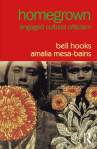
Engaged Cultural Criticism
by bell hooks and Amalia Mesa-Bains
My rating: 5 out of 5 stars
Originally published in 2006 – twenty years ago now – and re-issued as a new edition by Routledge in 2018, Homegrown is a collection of dialogues between writer-educator bell hooks and artist-activist Amalia Mesa-Bains. The dialogues are transcribed and have been organized thematically. Among the nine chapters are “Family,” “Public Culture,” “Home,” and “Memory.”
I read this book last year and chose to write about it now, because of what we’re seeing in our nation: divisions, protests, political violence, even killings. Some of our leaders – ones in office, others in the media – are encouraging us to “bring down the temperature.” Other leaders tell us to “fight like hell.” Meanwhile, too many of us take the bait, believing that those are the only two courses of action. Well, there are other courses of action, one of which is to take the energy that we would spend on the fight and use it to create the world we want by diverging from the paths we’re led to. People who embroil the public in bitter discourse get exactly what they want when we participate in it, and that includes ordinary people who use social media to play smaller roles in this supposedly binary dispute. Meanwhile, divisive thinking leads to the election of divisive leaders and to larger followings for divisive media outlets when we believe that there is indeed an existential either-or conflict that our side must win! My perspective says that there are no sides, that we are all in this together. The human race is complex and diverse, and buying in to the idea that we can be divided cleanly into “us” and “them” is absurd. If there is a culture war, then we should instead live in ways that make life better for us all, and in ways that prove to our group’s Others that there is no threat in accepting people unlike themselves. We can change our culture and the world with our daily lives in productive and respectful ways that no protest ever could by bridging gaps and forging relationships.
If I were to sum up the gist of this book, the two women are talking here about how to live in ways that embrace and realize progressive ideals that are very often discussed but less often enacted. What they point out, which I agree with, is that these ideals are not new and are rooted in existing cultural folkways— thus, the title: Homegrown. Yet, there is (cultural) work to be done to see these ideals and their manifestations take on greater significance, leading to greater appreciation of each other in the wider American culture. Their “Preface to the New Edition” begins:
Imagination plays a vital role in the struggle for liberation globally. It is our imaginative skills which we bring to creative work that promotes, enhances, and sustains democracy and individual freedom. What we cannot imagine cannot come into being.
Turning over the page, we find the original “Preface,” in which they call themselves “‘organic intellectuals,’ people who think critically and engage in dialectical exchange wherever they are.” Among the brief remarks there, we read hooks saying that they see themselves as parts of, not contrary to, their own cultures; and Mesa-Bain brings up something that I have long believed is extremely important: “the lack of solidarity around labor, immigration, education and cultural rights.” The way we learn, the way we work, the way we live, and who we live with are all intertwined.
Skipping ahead, in chapter four, Mesa Bains begins by remarking on “nuestra cultura“— our culture. The dialogue that follows emphasizes how expressions of culture are tied to economics, space, mass media, and other factors. For example, bell hooks notes that “increasingly people feel afraid to the leave their homes” and that most “people don’t have disposable income for culture.” So where do they turn, stuck at home and short on cash? To television, and more broadly to any kind of screen media. This gives the media an inordinate amount of power, since many people are listening to the voices on the screen instead of the voices in their neighborhoods, schools, churches, and communities. Culture, as a concept, is mixture of factors that shape our lives, from how we dress to the music we listen to and how we pray or what we look for in a good life. Those ideas about culture should be homegrown, not media-driven. When culture is shaped by a group of people living the same physical space, the shared values are based on common well-being; but when culture is shaped by media sources, value are driven by influences that want to harbor the money and attention for an outsider party’s benefit, i.e. marketing and sales.
Later, in chapter eight, bell hooks reminds us that “home is an imaginary place.” What turns an otherwise mundane physical space into a home? Us, our experiences, our memories, our ideas, our desire to see good things continue. In describing the experiences of Chicanos, Mesa Bains describes the “porous geopolitical identity” of people from Central and South America. This relates directly to our current situation with the so-called “immigration crisis,” a reaction defined by the notion that someone is either an American or is not— no in between could be possible! Yet, we have millions and millions of immigrants in this country – not just people who migrated north from Spanish-speaking countries – whose life-in-flux has been declared an irreconcilable problem. bell hooks describes a somewhat-similar condition for black people who left the agricultural rural South and moved to the industrial urban North, so a connection to Nature and the outdoors had to be sacrificed for escaping Southern racism and having greater economic opportunities. Thus, the concept of “home” is not so simple.
In the “Afterword,” what is encouraged is a “practical activism— an activism that’s connected to where you live, and to the vision of being homegrown.” bell hooks says that we need to teach our younger generations to “critique greed,” and Mesa Bains adds, “Many young people are motivated by wealth or celebrity.” When children are raised and taught by their own communities, their values and their work will reflect what is best for themselves and the people around them. Yet, when national and global corporations shape a child’s values, they will believe that status comes with money and that ideals are based in brand loyalty. The former is so much better and truer than the latter.
Today, nationally sold brands and the national offices of the major political parties stand to retain their tremendous power by our identification with their products and organizations. Certainly, they encourage us to see ourselves, first and foremost, as members of their group and to allow ourselves to be defined by their rhetoric, marketing, products, platforms, candidates, and election cycles. And certainly, it makes it much easier for them if we’re packaged up cleanly so their messaging can be effectively distributed, i.e. a target audience. (Then all they have to do “reach” the “independents.”) The best thing we can do for ourselves is dissociate from them, use their products without basing our lives on them, relegate party affiliations to the back burner, push family and local culture to the forefront, decide for ourselves what our own values are, and recognize for ourselves what is best in life. In today’s media-driven discourse, we hear, “Voters should be choosing their politicians, not politicians choosing their voters.” That assertion proves my point. By framing our own thinking in the prescribed ways and becoming intentionally predictable, we have already conceded that power to them. The reason that they can draw these political maps and run target ads is that they already know what we’re going to do. They don’t have to care what we think or how we feel, because they already know what we’ll buy and how we’ll vote! Which is all they care about. If, instead, our thinking was homegrown, we wouldn’t be falling for any of this.
