Literacy Narrative: “Blank Spaces”
In 2024, the director of composition at the college where I teach asked some of the professors to write literacy narratives that could be shared as examples in our freshman writing classes. I responded with this one.
Blank Spaces
by Foster Dickson
Nature hates blank spaces. I read that once in a book about gardening—how the running roots of grasses and the seeds that become little trees will quickly fill any patch of ground that we clear out. I believe that the human heart is the same: the blank spaces in our lives will be filled with something, too. And that’s how I came to love books and reading.
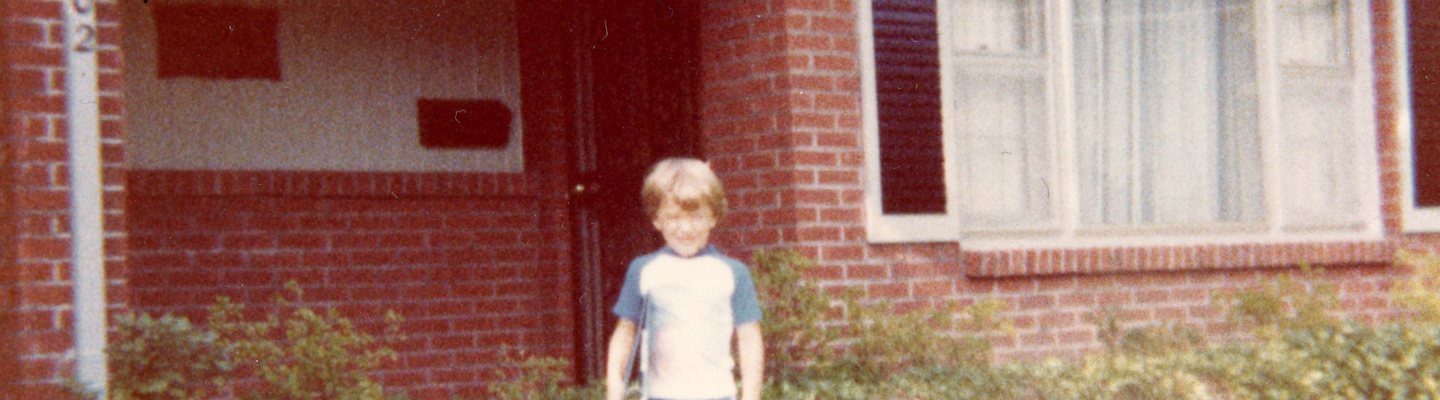
Growing up in balmy and rough Alabama during the years after the Civil Rights movement, boys were expected to run and fight, to play ball and hit things with sticks and hunt and fish. But not this one. Here I was: this boy, sickly and weak, allergic to pollen, plagued by asthma and poor vision, with my wheezing and runny nose and eyeglasses and soft heart. The question became: what do you do with a boy who is unable to go play outside the way most boys do, who could need an adult nearby in case his health problems flared up?
And so, in a time before iPads when TVs had four channels, they put books in my hands.
The fortuitous circumstance that made this important was that my brother, who is five years older, had learned to read in school by the time I was old enough to be shown what to do with a book. So we often huddled together and read, since it was all that a healthy eight-year-old boy could do with his sickly three-year-old brother. Having no clue what else to do, he did what his teachers had done at school; he pointed to each word as he said it. The other books that I remember came with a floppy vinyl 45 to put on the record player, and it told me the story as I flipped the cartoon-filled pages. I had my favorites and went back to them over and over. Then, through the sheer force of repetition, between my brother and the record player, my mind must have made the connections between the figures among the pictures and what the voices were saying out loud. I understood language: letters stood for sounds, words stood for combinations of sounds, and those had meanings. Soon, everyone marveled at how I could . . . read.
What was also fortuitous was: books appealed to my nature. They were more than a stop-gap or a diversion, not something to be cast aside as soon as there was something better to do. To me, they were just right, they made sense, and they were enjoyable for what they offered. Though I didn’t perceive this about myself until much later, I am not a competitive person. I like to work with people, not against them. I don’t measure myself against others and don’t regard my accomplishments or my traits using ideas like better or best. I’ve always been able to regard things or people for what they are, valuing their differences instead of ranking or comparing them to each other. We didn’t use the word diversity much back in the 1980s, but that’s basically what I liked most. I realized early on that the world was a great big place, and I was more interested in knowing about all of it than in conquering any part of it. This also ran counter to notions of manliness held by the boys and men around me, about being best, about being better and greater and superior, especially in front yard ball games or back-alley fights. Not me. I thought little of outdoing others and more about appreciating life for all it had to offer, and in my little world . . . books offered me a deep and wide expanse of possibilities that the people around me did not.
With reading, there are no victories or losses. Someone searching for a cliché might say, “Everyone wins,” but that’s not true because there are no winners where there is no competition. A book, experienced as it should be, benefits everyone: writers benefit by sharing their story or their truth, and readers benefit by receiving them. Everyone’s life is made better by the things that books contain. We all benefit from shared knowledge, and we all find some sort of inner peace from realizing that we are not alone in what we experience and feel. I grew up in a world where that kind of cooperative ideal was unacceptable: no, it isn’t that way. Somebody runs faster, somebody beats somebody else up, somebody scores more points in a game, somebody gets more out of a deal— somebody comes out on top and somebody comes out on bottom. I understand why contests and games have to be regarded that way – that’s the nature of competitive activities, like sports, even reading competitions like Accelerated Reader – but I have never understood why life would be lived that way. Yet, in my little corner of this great big world, it was.
I pushed myself further afield from my contemporaries when I openly embraced reading over other activities. During the years of elementary school, rather than trying to acclimate myself to sports, which I was clearly unsuited for, I chose to read. I tried tee ball and baseball, then my mother attempted to get me involved in tennis. Neither took. By that time too, I had glasses, which fell off the sweaty bridge of my nose when I played. What I always returned to was books. And I gained my love of books when it filled the blank space that was not there for most kids.
In the South – in the South, the way it used to be – a boy who was both not very athletic and not very social . . . well, it was assumed that something was wrong with boys like me. Hardheaded sort that I am, I didn’t bow down to that pressure. I held fast to what I had come to appreciate and enjoy, and the resistance from the wider culture only pushed me further into a life where books mattered very much. This was a time before bullying was frowned-upon, and the more that I faced, the more I just wanted to be alone. And the more I was alone, the more I fell back on reading. And the more I read, the less I wanted to be in the company of the people around me.
Relatively few people know the pleasures of an intellectual life. There are pleasures involved with encountering an exciting idea just the same as there are when we see an exciting performance by an athlete or musician. Among the key differences, the main one is that athletics and music are enjoyed outwardly, often in public and in groups, while reading is enjoyed inwardly, in private and often solitary. Many people assume, because they don’t see and hear the vigorous responses of the excited reader, that there are none. There are actually plenty. And that pleasure is akin to so many of the best things in life, like love and God: it occurs internally for the heart and the soul to know, not externally for the five senses of other people to perceive. Readers don’t jump and cheer when the great moments occur. That feeling, in all of its magnificence, still occurs— it’s just inside of us, and everyone else can’t see it.
The circumstances of our lives – in my case, having poor health as a child – can clear spaces that allow us to receive other gifts. Sometimes, these gifts are not what we want for ourselves, because in the short term, we see more value in what we’ve lost than in what we are gaining. Too many times, we can also allow other people to tell us what is valuable, and we believe them when we hear that what we are is not. I’ve been guilty of it, too, letting people diminish what I value. But, still searching for that elusive cliché that will pinpoint the truth, perhaps this one will do: “Never judge a book by its cover.” We can’t know what’s inside of something until we actually look inside of it. And so it turned out that, in my boyhood, Nature was clearing spaces, and in those spaces were planted greater gifts than my people could have given me themselves. In the decades since, I’ve filled those spaces with the words of William Shakespeare and William Faulkner, Thich Nhat Hanh and bell hooks, Albert Murray and Dorothy Day, Ryokan and Homer. While I may have lost out on some of the joys of community and the pleasures of belonging, books and reading have filled those blank spaces in ways that I never could have imagined.
All works produced by Foster Dickson (text, imagery, hybrid) on this website are protected within the “Attribution-NonCommercial-NoDerivs 4.0” Creative Commons License. For more info about the license, click here: CC BY-NC-ND.
