
50 GenX Movies that You’ve Probably Forgotten (or Never Seen)
When the subject of Generation-X films comes up, everybody remembers the John Hughes classics The Breakfast Club, Sixteen Candles, and Pretty in Pink, and Cameron Crowe’s Say Anything and Singles, and Kevin Smith’s Clerks and Chasing Amy. A more attentive movie buff might also remember Repo Man or Kids or Blue Velvet. Or maybe a few of you went out on a limb once or twice back in the ’80s and ’90s and tried to watch those cool new movies people were talking about, like Buffalo 66 or Slacker or Wild at Heart. But there’s much more, and I keep thinking of movies that I didn’t include in the first ten I offered, nor in the second ten that followed, and not in the supposedly last one after that, nor even in yet another one after that, so here’s a fifth installment. This summative list rounds it out to an even fifty movies, ones that might have gotten lost in the shuffle.
Phantasm (1979)
This might be one that you think of as a classic horror film rather than as a GenX film. But it is so GenX. We’ve got the kid who is alone because his parents died, we’ve got the cool older brother who drives a muscle car, we’ve got gratuitous shots of women’s breasts during a make-out session in a graveyard— c’mon! The movie also has elements of the plot that are totally random: a best friend who is a guitar-playing ice cream man, a blind fortuneteller with a pretty granddaughter who speaks for her, a black maid who comes out of nowhere in one scene, evil midgets in hooded robes who make weird noises, a discovery about the true nature of evil during a random visit to an antique shop. There’s more to this movie than just the Tall Man and that flying glass ball with the blade sticking out. And of course what could be more GenX than a string of sequels: part II in 1988, part III in 1994, part IV in 1998 . . .
Times Square (1980)
This lesser-known movie takes on a few classic elements to create something GenX out of them. We’ve got the odd couple who meet under tough circumstances— in this case, two teenage girls (a street kid and a well-to-do kid) who meet in a mental ward. After they escape, they relocate to an abandoned warehouse and dub themselves the Sleez Sisters. The pair go around the Times Square area mixing with the street people, throwing TVs off of buildings, and working in a low-end strip club. The street kid, Nicky, is a guitar player in the vein of punk rock and new wave, and her more-cultured friend helps her understand her talent for poetry, which manifests as the song “I’m A Damn Dog Now.” The movie also features Tim Curry, of Rocky Horror Picture Show fame, as a renegade radio DJ who reads fan mail on-air and who likes Times Square the way it is. Three things about this film: the period soundtrack is great, some of the dialogue is very un-PC, and the unrealized young lesbian sexual tension is palpable. More astute movie buffs will also recognize the mayor from Ghostbusters who plays a doctor and Craig’s mom from Friday who plays a social worker. Times Square puts the classic GenX twist on the coming-of-age story— the cool kid seems fun and interesting until you figure out that she really is mentally unstable.
Ladies and Gentlemen, The Fabulous Stains (1982)
Here, we stay with the punk rock girls motif. Directed by Lou Adler, who became famous in the 1960s as a music producer for The Mamas and the Papas, this film is about a female punk rocker who goes viral in the 1980s sense of what that would mean. It stars Diane Lane, the GenX beauty who was in Six Pack the same year and in The Outsiders and Rumble Fish the following year. Creating an alter ago after her mother’s death, Lane’s character becomes Third Degree Burns, leader of a band who speaks for angry American women! In some ways, this might be GenX’s version of the 1976 film Network with its unlikely hero who rises to great fame as a spokesperson for fierce dissatisfaction.
Seven Minutes in Heaven (1986)
If you don’t remember this film, it might be because it stars Jennifer Connelly and came out the same year as another far more successful film that she was in called Labyrinth. Seven Minutes in Heaven, named for the youthful sex-dare game where two people agree to be locked in a closet together, is a teenage romantic comedy and a bildungsroman story. Like so many GenX films, its plot occurs because parents are absent— our main character’s dad goes out of town on a business trip and leaves his teenage daughter to stay alone, and her boy-crazy best friend, played by GenX mainstay Maddie Corman, urges her forward into the kinds of behavior parents don’t approve of . . . To me, this movie is charming but is also one step above an after-school special. (If you don’t recognize Corman’s name, you’d know her face: she was in Some Kind of Wonderful, PCU, and Boys.)
Thrashin’ (1986)
Next to breakdancing movies, skateboarding- and BMX-themed movies were also popular in the 1980s and 1990s. Here, the producers explored the rival-gangs storyline with the Romeo-and-Juliet forbidden-love element thrown in, but set in California this time. And for fans of skating in the ’80s, there’s all the things: dangly earrings and denim vests, close-ups of ragged Converse All-Stars, slow-mo shots of drop-ins, posers leaning on walls. Its star Josh Brolin had just been in Goonies, and there’s also Richard Rusler who was one of the two popular jerks (alongside Robert Downey, Jr.) in Weird Science. Sherilynn Fenn, who became famous on Twin Peaks in the 1990s, is also featured. This film got 6.5/10 stars in IMDb, but I’m not sure that it’s that good of a movie . . .
Vamp (1986)
This heavily stylized vampire movie stars a few of the minor GenX actors: Chris Makepeace who was the lonely kid Rudy in Meatballs, Richard Rusler again, and Gedde Watanabe who was Long Duk Dong in Sixteen Candles, among others. With a very GenX premise – heading to a fabled seedy bar to hire a stripper– the guys run into a completely different kind of problems than the horny Angel Beach boys in Porky’s. Instead of a big fat guy chomping a cigar in the backwater, they find vampires in the urban darkness, one of whom is played by model and art-rock icon Grace Jones.
The Principal (1987)
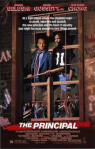 Alongside movies like Tuff Turf and Class of 1984, this is one of the more violent and harsh high school movies. Jim Belushi plays a teacher who can’t play by the rules; he is a smart ass and a pain in the neck. So, the school system offers him a job as a principal of an extremely rough high school. This will not go well, also because he has no experience and no training. But in typical upstart fashion, he teams up with the school’s ex-football star-turned-janitor, played by Louis Gossett, Jr. With help from a group of Hispanic guys in the auto shop, they overcome an apathetic faculty, a complete lack of order, and a drug dealer named Victor. Rae Dawn Chong co-stars, playing the teacher who actually cares, but even she gets sexually assaulted by a drug dealer named White Zac. This is no Ron Carter story or Lean on Me— this is the Walking Tall of the feel-good education movie subgenre.
Square Dance (1987)
One of a Winona Rider twofer, this was the first film where the young actress played the main character, whose name is Gemma. The scenario is somewhat familiar to us: country comes to town. Jason Robards plays her grandfather, who wants to shelter her from the life that her mother would certainly expose her to; the older actor was a 1980s mainstay, with films like Max Dugan Returns and Something Wicked This Way Comes earlier in the decade. Rob Lowe also stars opposite Winona Rider, and he was familiar by this time, too, having already played the heartthrob in Class, Oxford Blues, and St. Elmo’s Fire before this one. Though Square Dance isn’t a classic by far, a GenXer will recognize the zeitgeist: dysfunctional family, sexual awakening, etc.
Boys (1996)
The second part of Winona Rider twofer, this one came ten years later— after Beetlejuice, after Heathers, after Roxie Carmichael, after Edward Scissorhands, after Reality Bites, after American Quilt . . . but before she was arrested for shoplifting in 2001. In this movie, she plays a beautiful young woman who some boarding schools boys hide in their room. Of course, there are cops looking for her, and what do GenXers love more than a bunch of teenagers outsmarting the cops? This one also stars Lukas Haas, who played the wide-eyed little Amish boy in 1985’s Witness, and James LeGros, who GenXers will recognize from Drugstore Cowboy and Point Break.
Foxfire (1996)
This teen drama was Angelina Jolie’s coming-out film. She had been in a few music videos, including Widespread Panic’s “Wonderin’,” and in the movie Hackers the year before, but this one garnered her a fair amount of attention. In the film, a group of teenage girls deal with a teacher who sexually exploits female high school students. Thinking about third-wave feminism in the 1990s, this was a movie that pointed to Generation X’s pre-#metoo politics. The evolution had obviously not been completed since this film’s feminist fight-back message goes alongside Hollywood’s continuing “we’ll need you to show your boobs” ethos. This film shows that, in the mid-1990s, we hadn’t yet arrived but we were heading toward girl power in a serious way.
The Original 10
Bad Boys (1983)
Not to be confused with the Will Smith and Martin Lawrence movie, this one about life in a juvenile prison for boys is both dark and brutal. Sean Penn has the lead role, playing Mick O’Brien, who is incarcerated for killing his street rival’s brother. In prison, actors Esai Morales and Clancy Brown play two really scary teenagers who target Mick in the facility. Ally Sheedy, who would later be the shy girl with the weird sandwich in The Breakfast Club, plays Mick’s girlfriend. Any male Gen-Xer who watched this one on cable TV from the comfort of his living room couch had only one thought, I don’t ever want to end up in prison.
Class of 1984 (1982)
From the terribly-violent-high-school-you’d-never-want-to-attend subgenre, this thriller has mainstay Perry King (who would later star in the series Riptide) as a music teacher who refuses to accept the bullying of a small gang of punks who are selling drugs at the school. This story is more than Rebel Without A Cause gone wrong. The gloves are off in this one. This little gang of four absolutely terrorizes the new teacher, who finds out during the process that the leader of the small group is a musical prodigy. The ending of this film, which I won’t give away here, is particularly brutal and violent, and these scenes go on and on for a while.
Human Highway (1982)
’60s folk rocker Neil Young and new wave mainstay Devo team up for this extremely poorly acted portrayal of a very poorly crafted story. The movie centers on a diner near a nuclear power plant that leaks toxic waste, but the story veers off into the minds of Young and Devo. There’s a prolonged staccato version of Young’s “Hey Hey My My” in there. If you like things that are so bad they’re funny, you’ll like this. If not, you’ll never get back that hour-and-a-half of your life.
Shakes the Clown (1991)
Oddball comedian Bobcat Goldthwaite stars in this film, which offers a grim perspective on the life of a birthday-party clown, including the attendant alcohol abuse and lechery behind the scenes. If the horror movie It didn’t solidify the clowns-are-creepy motif, then this one did. As for Bobcat Goldthwaite, he was pretty easy to digest in mainstream movies, like One Crazy Summer, with his silly, growling speech impediment, but this movie takes the same hard left turn that Adam Sandler took in Punch Drunk Love. Fans of Bobcat’s more well-known work were probably deeply disappointed, and possibly deeply offended. But this one is a classic of the ugly honesty that GenX demanded.
Suburbia (1983)
Not the big-budget thing from 1996 that tried to capture our generation, but the early ’80s one made by Penelope Spheeris. Another bleak film, this one was cast with mostly no-name actors, the exception being Flea, the bassist for the Red Hot Chili Peppers. The story centers on a makeshift communal home for runaway punks in an abandoned housing project where packs of dogs scavenge for food and where a pair of bitter, unemployed blue-collar workers try MAGA-style to show the punks who’s boss. This was one of my favorite films in the 1980s. Great music, no frills, solid story.
Dudes (1987)
Once again, director Penelope Spheeris who once again includes Flea in the cast, but this time, she had John Cryer who was fresh off the role of Duckie in Pretty in Pink and Daniel Roebuck who had just played the cold-blooded killer Samson in River’s Edge. This movie has the classic Gen-X feature of juxtaposing completely unlike things in wacky ways – in this case: punk rock, road trips, and the American West – while including punk band The Vandals, an Elvis impersonator, a pink Cadillac, a pretty female tow-truck driver, a jailbreak, and a heroic final showdown with the bad guy.
Liquid Sky (1982)
Something between a sci-fi alien story and a social commentary on androgyny and sexual repression, this slow-paced, awkward movie is set in the early new-wave scene in New York City. In the movie, two blonde models, one male and one female who are played by the same actress, deal with sexual animosity and ambiguity: for the female model, it is having everyone want her, and for the male, it is wanting to be sexless. That would be complicated enough but there’s also a hidden alien space craft that is incinerating people one by one.
Roadside Prophets (1992)
This movie was not good, but it probably should’ve been. It stars John Doe of the punk band X and Adam Horowitz of the Beastie Boys who ride cross-country on motorcycles. And it also has acid king Timothy Leary, folk singer Arlo Guthrie, and Kung Fu star David Carradine. But quirky and weird crossed over into downright dumb. Trying to capture the Gen-X penchant for randomness didn’t work this time.
Streets of Fire (1984)
Heavily stylized noir, this action film pits cool-dude Michael Paré against a motorcycle gang led by Willem Defoe’s really creepy character in an effort to rescue his sultry girlfriend played by Diane Lane, who had just been in the movie adaptation of The Outsiders. Alongside Rumble Fish, which shares some stylistic similarities to this one, this movie stands as one of the more unique films of the time, merging a post-World War II sensibility with noir and arthouse elements.
Gummo (1997)
The only viable response to watching this movie is: Man, I’m glad I don’t live like that. This is probably one of the last films that I would say belongs to Generation X, since the age-span of our generation in 1997 would have been 17 to 32. The movie was the first feature made by Harmony Korine, who was then in his mid-20s. (Korine had a memorable series of appearances on David Letterman’s show and was featured in the 2008 documentary Beautiful Losers.) Put simply, Gummo is bleak and bizarre and creepy.
The Second 10
Went to Coney Island on Mission from God… Be Back by Five… (1998)
If you think of Jon Cryer as either teenage lover boy Duckie from Pretty in Pink or as the flunky chiropractor Allen in Two and a Half Men, you probably didn’t pay much attention to him in the years between. This late-’90s indie film, which followed the minor high-school comedy Hiding Out, had Cryer playing a young man who goes with his alcoholic best friend on a day-long quest to find their childhood friend who disappeared. This movie captures and uses the Generation X penchant for randomness and pseudo-intellectualism pretty well. The movie only gets a 5.8/10 rating on IMDb, but it’s a better movie than that.
Paris, Texas (1984)
Directed by Wim Wenders and with a storyline from Sam Shepard, this European movie features indie mainstay Harry Dean Stanton playing Travis Henderson, a man who remerges in his small town after he wandered off four years earlier. His young wife, played by model Natassja Kinski, has left, and his young son has been raised by his brother during that time. Travis wants to reunite his family, so his brother helps him, and it becomes a road movie. Some people say that the end of this film is the greatest movie ending ever. Best? I don’t know. But it is heart-wrenchingly sad.
Arizona Dream (1993)
After Edward Scissorhands and before Benny & Joon and What’s Eating Gilbert Grape?, Johnny Depp starred in this film about a young man who goes to Arizona for his uncle’s wedding— but it won’t be that simple. This movie has a stellar cast: comedian Jerry Lewis, beauties Faye Dunaway and Paulina Porizkova, indie actors Lili Taylor and Vincent Gallo, and character actor Michael J. Pollard. If it’s possible to combine Gen-X floundering, unlikely romance, and the complexities of coming-of-age with halibut in the desert Southwest, this film does it.
Night on Earth (1991)
This movie is centered around taxi cab rides in five major cities around the world, and it tells its story in five vignettes about an array of characters. Back when Bravo! was an arts channel, they used to show movies like this one at random times, between Cirque de Soleil reruns and that documentary about Paganini. This was the first time I remember seeing Roberto Benigni, who seemed so wacky, and with her baseball cap on backwards, Winona Ryder plays a distinctly different kind of role here. (This film came out in the year between Edward Scissorhands and Bram Stoker’s Dracula.) These stories are short on action, but like My Dinner with Andre, it’s the conversations that carry it forward.
Stranger than Paradise (1984)
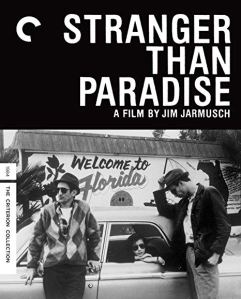 Set in New York City and starring musician John Lurie, who you’d recognize from Wild at Heart or Desperately Seeking Susan, and Richard Edson, who you’d recognize as the garage employee who joy-rides the Ferrari in Ferris Bueller, this is another distinctly Generation X road movie, as two Hungarian cousins leave New York City to visit their aunt in Cleveland. It’s only a half-hour long, and being a Jim Jarmusch film, you’ll notice that director’s distinct style.
Living in Oblivion (1995)
Self-described as a “film about filmmaking,” this movie is a farce about the making of a low-budget movie. I remember reading about this in Village Voice when I subscribed in the mid-’90s but not actually seeing the movie until later. Of course, the cast is pure ’90s indie: Steve Buscemi, Catherine Keener, Dermot Mulroney, James LeGros . . . and even has Peter Dinklage who later became famous in Game of Thrones. If you find chaos funny, you’ll like this movie. If you don’t, you probably won’t.
Where the Day Takes You (1992)
Another one I saw back when Bravo! showed good movies, Where the Day Takes You tells the story of a group of homeless teenagers in Los Angeles led by a cool dude named King, played by Dermot Mulroney. The movie intersperses its main story with videotaped segments of King talking to a counselor about how he’d like to get off the street. Lara Flynn Boyle plays a new arrival on the scene who, of course, falls in love with King. It’s a pretty bleak movie, dealing in drugs and sex, but it’s not as bleak as some on this list.
Near Dark (1987)
Like The Addiction and Vamp, this is one of the lesser-known Generation X vampire movies. It is alternately slow-paced creepy and wildly violent. It lacks the Hollywood feel of Lost Boys, which came out the following year, but it’s better than a movie like 1985’s Fright Night, which was pretty hokey. This one has a small-town boy to fall in love with a sultry girl, played by Jenny Wright from The World According to Garp. But she turns out to be a vampire, and her homeless-punk-Winnebago family doesn’t like this new boy hanging around. Her father is played by Lance Henriksen, of Pumpkinhead fame, and her brother by Bill Paxton from Weird Science. The movie gets a little stupid and gory as it goes along, but hey, it’s a 1980s horror movie.
At Close Range (1986)
Set in the late ’70s in rural Pennsylvania, this film has Sean Penn playing Christopher Walken’s son in a crime thriller that is based on a true story. This was also a film that paired Penn on screen with Madonna, who did the movie’s main song, “Live to Tell.” At Close Range is gritty and tough in its portrayal of cold-blooded killers in a crime family that specializes in the theft of farm equipment, but Penn’s character Brad Whitewood, Jr. finds out that he’s in over his head when he and his friends try to get in the same racket.
Less Than Zero (1987)
I don’t know how I made my first list of ten GenX movies without mentioning this one, which was based on a Bret Easton Ellis novel. I remember seeing Less Than Zero when I was a teenager and thinking that LA looked so cool— until Robert Downey, Jr.’s character had to become a gay prostitute to work off his drug debt. Less Than Zero had Jami Gertz the year before she starred in Lost Boys and Andrew McCarthy the year after Pretty in Pink. It also has a killer soundtrack, wacky ’80s fashion, stacked TV sets, and a red 1959 Corvette convertible. It’s probably the most Hollywood of the movies I’ve listed, but because it’s also dark and dated, it doesn’t get as much play these days.
The Third 10
Turk 182! (1985)
Starring mild-mannered 1980s mainstay Timothy Hutton, best known as Conrad from Ordinary People, this movie is all about sticking it to The Man. The main character’s brother is a New York City firefighter who has been hurt in an accident, but he is denied benefits from the city. In response to the injustice, our hero begins to graffiti messages against the mayor . . . which, of course, causes the mayor to demand that it stop, leading to the inevitable confrontation between our righteous Everyman and the powerful leaders who don’t want to be challenged.
Three O’Clock High (1987)
I learned what hypoglycemia is from Three O’Clock High, a classically ’80s movie about high school social boundaries and bullying. The story focuses on Jerry, a weakling teacher’s pet who gets assigned to write a school newspaper story about a new student at the school, the leather jacket-wearing badass Buddy Revell. Unfortunately for Jerry, he claps Buddy on the arm while arranging his interview, prompting the tough guy to tell him that they will fight after school. Jerry spends the day dreading what he is sure will be a royal (and very public) ass-kicking. This was Richard Tyson’s movie debut, coming out the year before he played the mysterious love interest in Two Moon Junction and a couple of years before he was the psycho dad in Kindergarten Cop.
Rumble Fish (1983)
In Rumble Fish, director Francis Ford Coppola had some of the same cast of the now-classic The Outsiders, but with its black-and-white surrealism, its bald focus on teenage anger, and its themes of police brutality, Rumble Fish was never going to be as successful or well-known. Where The Outsider kept our attention on the compassion and naiveté of Pony Boy and Johnny, this movie gave Matt Dillon another chance to play a disgruntled young man, this time as the lead who is ambivalently pining away for the return of his brother Motorcycle Boy, played by Mickey Rourke.
The Pope of Greenwich Village (1984)
Back in the ’80s, Mickey Rourke was the cool dude – usurped later by Johnny Deep, when 21 Jump Street came on TV – with his smug arrogance, mumbling cadences, and greasy hair. The year before this, he was Motorcycle Boy in Rumble Fish, and in the years following, he starred in 9 1/2 Weeks, Barfly, and Angel Heart. This strangely titled movie caught my attention when I was a kid, but I didn’t watch it until later. The Pope of Greenwich Village tells the story of two young friends who screw up royally and end up with both the police and the Mob after them.
Heavy (1995)
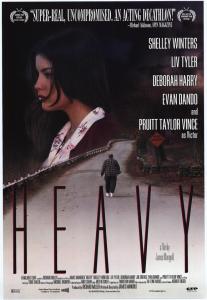 Part one of this Liv Tyler twofer, Heavy had her playing a sweet, young waitress named Callie who gets a job in a small café owned by the painfully shy, overweight, middle-aged cook Victor and his mother. The movie is mainly about Victor, who dreams of becoming a chef and has a crush on Callie. Sadly for him, though, Callie’s rude boyfriend, played by Evan Dando of The Lemonheads, stands in the way of Victor and Callie even becoming friends. This is a very good film, which also co-stars a middle-aged Debbie Harry (from Blondie).
Stealing Beauty (1996)
Part two of a Liv Tyler twofer, this movie is visually striking, has a great soundtrack, and a stellar cast. This time, Tyler plays a teenage girl who travels to the Italian countryside in search of answers about her father, and to find those, she stays on a hilltop villa full of eccentric artists. Of course, there’s a love story sub-plot, too. In addition to Liv Tyler, who was the beauty du jour in the mid-’90s, director Bernardo Bertolucci has Jeremy Irons as a dying poet and Donal McCann as a stodgy old artist. This is also just a great film.
My Science Project (1985)
My Science Project is not a bad little 1980s sci-fi/fantasy teenage comedy, but it probably didn’t stand much chance since it came out the same year as another sci-fi/fantasy teenage comedy: Back to the Future. In this one, the main character, a machine-head who lives for auto shop and junkyards, doesn’t team up with a wacky doctor and a flux capacitor; he finds one of those globes like they used to sell in Spencer’s – the ones that attract electricity to your hand – and it brings on all kinds of crazy consequences. Along with his mouthy sidekick and would-be girlfriend, his half-baked effort to avoid a science assignment gets him in over his head.
Time Bandits (1980)
Time Bandits was one of the mainstays of Saturday or Sunday afternoon TV, when random programs and obscure movies got played, probably by hapless interns who manned the controls while the legitimate broadcast professionals were off. This movie is weird and British and smacks of the old Dr. Who. It features a child main character, John Cleese from Monty Python, and of course, steam-punk midgets. Time Bandits is a reasonably good fantasy film for its day, but in retrospect, it’s pretty quirky.
Light of Day (1987)
This movie about a struggling brother-sister rock band came out in the late ’80s and showed Michael J. Fox in a different kind of role than young Republican Alex P. Keaton in Family Ties. The sister is played by Joan Jett, whose 1982 cover of “I Love Rock N’ Roll” gave her mainstream fame (after being in The Runaways). The conflict surrounding the band’s efforts to succeed are complicated by the fact that she is a single mother who leaves her child at home with her own mother. One little known fact about the movie: Bruce Springsteen wrote the title track that the band plays as their signature song.
The Heavenly Kid (1985)
This last one is from the nerd-turns-cool subgenre of 1980s comedies. The story starts with the cool dude from the ’60s who dies in Rebel Without a Cause-style chicky run, but comes back as a guardian angel to help an ’80s teenager find his mojo. The cast includes Richard Mulligan as a Heaven-sent helper a la Clarence in It’s a Wonderful Life, and the dad is played by Mark Metcalf, who was best-known to our generation as Neidermeyer in Animal House then as the mean dad in Twister Sister’s “We’re Not Gonna Take It” video. The Heavenly Kid has all the typical ’80s high school stuff, including the makeover into the totally dated clothes and the blonde popular girl who our loser-hero dreams about, but it also has a twist in its story.
The Fourth 10
Gas Food Lodging (1992)
This film stars Ione Skye in the years after River’s Edge and Say Anything and Fairuza Balk in the years before The Craft, American History X, and The Waterboy. It’s the story of two teenage girls living with their single mother, who manages a gas station and motel in the middle of nowhere. They’re trying to grow up and realize lives that are bigger than the mundane existence they have in the desert. As an aside, J. Mascis of Dinosaur Jr. also has small role.
Over the Edge (1978)
Matt Dillon became truly famous with the 1983 double-whammy of SE Hinton’s The Outsiders and Rumble Fish, followed by The Flamingo Kid in 1984. This one was his first feature film. I’d say, back in late 1970s and early 1980s, there were three young actors who played the best teenage tough guys: Sean Penn, who was Mick in Bad Boys; Jackie Earle Haley, who was Kelly Leak in Bad News Bears, and Matt Dillon. All three dudes just had it— bad attitude for no good reason. In this movie, Dillon plays the unruly, dangerous friend of a well-to-do junior high school kid. They live in a wannabe-idyllic suburb, but the problem is that the teenagers and kids in the community are terrible. Then, after Dillon’s character Richie gets killed by the hard-nosed cop who is always hassling them, the teenagers go crazy!
Gleaming the Cube (1989)
Christian Slater could do no wrong the 1980s – The Legend of Billie Jean in 1985, The Name of the Rose in 1986, and Heathers in 1988 – but then there’s this clunker in 1989. (Thankfully for him, he redeemed himself in 1990 with Pump Up the Volume and again in 1993 with True Romance.) Gleaming the Cube was a painfully obvious effort to capitalize on Slater’s indie image by casting him as a skater, but if the studio folks were going to put a cool actor into a cool scenario, the least they could have done was make a cool movie, not some TV action-show cheese. In the movie, Slater’s character is trying to find out who killed his Vietnamese (adopted) brother, and of course, has to confront the bad guys. They did throw Tony Hawk in there to give it some street cred, but still no.
One on One (1978)
It was impossible to grow up in the 1980s and avoid Robby Benson. In this movie, he played a basketball player who has trouble adjusting to life in college. Before that, Benson was Billy Joe McAllister in 1976’s Ode to Billy Joe. Later he was the lead in Chaim Potok’s The Chosen and played George Gibbs in a TV movie of Our Town. Either this guy was versatile as hell or some executive in Hollywood decided that Benson was the teenage/young adult Everyman du jour. About this movie, we’ve got the underdog story of a small town underdog who goes bigtime and is in over his head, but of course, there’s a pretty girl to help him get through. Remember, in the ’80s, it was always a love story . . .
Crossing Delancey (1988)
This movie about being young and single . . . and pressured to marry might age out of being a GenX film, since those in our generation were between ages 8 and 23 in its release year 1988. Only the oldest GenXers, those born in the mid- to late 1960s, were old enough to get married, but this film’s GenX vibe comes from its ’80s-ness. New York City in the 1970s and ’80s was a mythical place, and lead actress Amy Irving was very recognizable at this time, most notably from 1984’s Micki + Maude. (And of course, we recognize actor Peter Reigert as Otter from 1981’s Animal House.) While not many of us were young, happily single Jewish women working in a New York City bookstore, the vibe of our generation is still there.
Reform School Girls (1986)
 I hadn’t thought about this movie in a long time until I was re-watching Lost Boys and saw the poster on Sam’s wall. This is an exploitation film from the girls-behind-bars sub-genre, which is really just a cheesy excuse to make a nudie movie with a few girl-fights in it. The villain here is Miss Edna, an ugly, mean woman with a scratchy voice who runs the juvie dorm for girls as her own private hell. The other villain in the story is ’80s sexy mean girl Wendy O. Williams, who is something of a gang leader. The acting is bad, the sets are cheap, all the things— but it was the ’80s, so audiences put up with it because they knew two things: there would be gratuitous nudity, and the villain would be defeated in the end.
Pretty Smart (1987)
This movie is probably the most obscure one in this list. Its story has two rival factions of teenage girls in a boarding school on a Greek isle coming together when they realize that the headmaster is secretly videoing them and selling drugs. I added it in part because of the plot line’s general similarity to Reform School Girls. And also because it was one of Patricia Arquette’s first films. Arquette would later become much more well-known in 1990, playing Alabama Wurley in True Romance.
The Bad News Bears in Breaking Training (1977)
I loved the original 1976 Bad News Bears movie. This one came out the following year and ranks up there with the first one. They made one more of these, The Bad News Bears Go to Japan, which came out two years later in 1979, but . . . they were basically trying to keep the motif in this movie going. Two were enough. This sequel to the original is a mixture of underdog comedy and road movie, with most of the same characters and actors. This time, though, the story is not about the young pitcher Amanda and the drunkard Buttermaker. This time, the remaining Bears get an opportunity play another team in Houston, even though they have no coach— so they go anyway. Its story is highly unlikely and requires some willing suspension of disbelief, but it’s still charming to watch. Especially the end, when Tanner Boyle gets chased around the outfield in the Astrodome as the crowd cheers, “Let them play! Let them play!”
Even Cowgirls Get the Blues (1993)
Adapted from a Tom Robbins novel, this movie stars Uma Thurman as Sissy Hankshaw, a hitchhiker with incredibly large thumbs. The film’s release date in 1993 settles it right in between her earlier performances in Dangerous Liaisons and Henry & June and her big hits that followed: Pulp Fiction and Beautiful Girls. Its director Gus Van Sant had also just made 1989’s Drugstore Cowboy, 1991’s My Own Private Idaho, and a whole bunch of music videos for popular bands. This movie is quirky and odd, to some degree magical realism. It features a has-been model and an all-female dude ranch, and the conflicts in the film are set in motion by a transsexual advertising genius in New York who abhors vaginal odor and thus operates a re-beautification ranch that doubles as a sanctuary for whooping cranes. Other notable actors in the cast are Pat Morita (Mr. Miyagi), Keanu Reeves, Angie Dickinson, and two of my favorites: Crispin Glover and Victoria Williams.
Corvette Summer (1978)
I feel certain that Mark Hamill had no idea how big Star Wars was going to be when he signed on to do this movie, which came out the following year. Corvette Summer is about a high school senior who is the main machine-head in his auto-shop class, and they take a half-wrecked Corvette from the junkyard and rebuild it. When they get done, the thing is ultra-tricked out, and they’ve made it even more unique by putting the driver on the right side (like cars in Europe). Everything is cool until one kid (played by The Partridge Family’s Danny Bonaduce) leaves the keys in it and goes to buy Cokes. Of course, the car gets stolen, and Hamill’s character hits the road to find it. While he’s bumming around Las Vegas, sleeping in a U-Haul trailer and finding ways to stay fed, he meets a pretty young woman (played by Annie Potts) who is trying to start as career as a prostitute. With these kooky characters in place, the two become an unlikely duo with conflicting aims. Yet, our protagonist is singular of purpose: get that car back. Though this is not a very good movie, it is also not typical and formulaic like a lot of high school films from the time. (A bit of trivia: director Matthew Robbins wrote the screenplays for 1974’s Sugarland Express and 1981’s Dragonslayer, then directed The Legend of Billie Jean in 1985.)
And for those who at least scrolled all the way to the bottom, whether you actually read all of it or not, here’s your bonus movie— making it 50 plus 1 to grow on.
Smithereens (1982)
Another punk-rock girl story, this one follows a main character who has no talent but still wants to be famous. Like Times Square and Liquid Sky, this was one of several movies that foreshadowed a mainstream interest in New York City’s artistic young people in the 1980s. The film’s director Susan Seidelman made Desperately Seeking Susan three years later. At this point, though, MTV was brand new, the average American had never heard of Keith Haring or Jean-Michel Basquiat, and Madonna was still rolling around on the floor in fishnets. So, Smithereens remained a cult hit.
