The Watchlist Still Lives! (The Great Watchlist Purges, January 2025)
Back in 2020, I took on the idea of emptying out my overfilled IMDb watchlist as a way to keep my mind occupied during the stagnation of the COVID-19 quarantine. And the task did that— it kept my mind occupied searching for and watching the films I had stored there. The main criteria for the watchlist is pretty un-scientific: if I run across a movie that I’d like to watch but either didn’t have the time or the access to watch it, then it gets added. So, if I see something I want to watch and actually watch it right then, it never makes it into the list. But lots of movies do . . . Some come from browsing streaming sites, while others come from IMDb recommendations. (Very few come from personal recommendations, unfortunately.) These films span a pretty broad cross-section of subjects, styles, and places, so the watchlist has long had an eclectic quality to it, and delving into it sent me down a rabbit hole. During those awful years of cultural anxiety and collective isolation in 2020, 2021, and 2022, I watched a whole bunch of movies . . . and added a whole bunch, too.
As 2023 began, the pandemic had pretty much passed, and I decided that this semi-maniacal pursuit should be finished up. It was time to relax and just enjoy watching movies again. Which is what I’ve been doing since. The good part is that keeping up with movies in this way has reinvigorated my love of them in a way that I hadn’t enjoyed since the 1990s, in the days of video rental stores. (I’ve watched many more movies than I’ve written about in these purges, but those have been haphazard selections that had nothing to do with emptying the watchlist.) What makes my watchlist particularly difficult is the fact that it is usually stocked with older, obscure, and foreign movies— ones I can’t always find right away. The good news is that the number of movies out there to watch is endless, and I never get tired of finding them.
Here are the movies in the list that I have found and watched since the last post in July 2024:
Watership Down (1978)
Watership Down was a commonly assigned novel when I was growing up, but if I read it, I don’t remember what I read. This animated adaptation was made in the late 1970s, a few years after the novel was published in 1972. I was interested in it now, since its storyline is an allegory that aligns with the current climate crisis. There is a community of rabbits whose home, called The Warren, is being destroyed by a human construction project, and they have to leave. Of course, the first rabbit to assert that something bad is coming is met with conservative backlash. Other rabbits tell him to hush up, or they call him crazy or paranoid, while the old leader of the community replies that they’ll wait and see what happens. Yet, a small band of them takes the proactive approach and heads out to find a new place to live. And out on the road, they meet all manner of challenges. For a movie that was made for children, this one is dark, kind of violent, even a bit disturbing in its realism. I’m glad I watched it and can say that it was well done, but it’s also pretty heavy.
Dog Star Man (1964)
I wasn’t sure what this movie was going be, and after watching, I’m still not sure what it was. I’d never seen anything by this director Stan Brakhage, who is an American. The description says it’s a “experimental film [ . . . ] in which a man and his dog ascend a wooded mountain.” (The title caught my eye because of the novel The Dog Star, but that’s about a closeted gay teenager in New Orleans, so this story isn’t related.) Brakhage was into creating imagery by physically manipulating the film itself, by scratching it and things like that. The story here is told very nontraditionally, with little that would resemble a plot. Though the tone and style were different, it kind of reminded me of Begotten, which came later, in 1990. I’m glad I watched it but can also share that the lack of concreteness wore thin as the film went on, though it was not even ninety minutes long. It’s available on YouTube, if anyone is interested.
May Morning (1970)
This film was billed as an Italian-made thriller about students at Oxford University, self-described as a “dramatic and penetrating examination of the intellectual and moral standards existing at England’s Oxford University . . .” That’s more high-minded than the reality. It’s really an Italian movie about how British people at Oxford are snobs who don’t like foreigners. The main character is handsome but not interesting, and is also kind of a dick. He’s supposed to be this great rower so all the teams want him, but he’s such a jerk that he can’t get along with anyone. The narrative seems to blame the antagonism on British snobbery. What I got from it was: the guy is an outsider who refuses to get along with people or follow rules.
The Twilight People (1972)
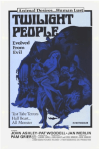 The rating on IMDb was only 4.1, which is about right or maybe a little generous. This is a Filipino exploitation film about a Dr. Moreau-ish island where experiments with cross-breeding people and animals are leading the doctor to create a super-human that will be able to survive climate change. The doctor has his men to kidnap a super-smart cool dude to be a prototype for a super-human who can adapt to the coming environmental collapse, which most people won’t adapt to. (This was fifty-three years ago, mind you, but he’s basically describing climate change.) Ultimately, the story is neither unique nor well-executed. Pam Grier actually plays one of the half-human, half-animal characters – a panther woman – but even she isn’t used well in the film. For fans of weird films or cult classics, this one could be enjoyable, but for most folks, nah . . .
Tennessee Waltz (1989)
Being a Southern movies guy, I ran across this film when I was looking for a documentary about Tennessee that I couldn’t remember the name of. Here, a British entertainment lawyer doing some work in Nashville gets framed and also ends up in an interracial relationship with a black teenager. It stars the late Julian Sands and Stacey Dash, who played the best friend in Clueless. IMDb had it with a low 5.4 rating, but the cast is strong: Ned Beatty, Rod Steiger, and a cameo from Johnny Cash. I actually found the film on YouTube mistitled as Tennessee Nights, not Waltz, and watched it there. It’s not a great movie but decent, considering its time. It reminded me of 1987’s Angel Heart, but without the voodoo. If I’m right in making a comparison, then it suffered from the same problems that any knockoff suffers from. This is a fish-out-of-water story, where a guy doesn’t understand the backroads South yet has to navigate places he has no business going. It doesn’t go well for him.
Heartaches (1981)
I wasn’t sure what to think about this one before watching it, but it didn’t take long to realize that it was bad. It’s about a young married woman, played by Annie Potts, who is pregnant with her husband’s friend’s child, so she takes off. In doing so, she meets a new free-spirited friend, played by a bleached-blonde Margot Kidder, and they become the odd couple. The whole thing is very 1980s, mixing the common story elements of adult stories (marital dysfunction) and teenage stories (meeting a wacky new friend while on an adventure). But the whole thing is forced and badly acted. There’s a reason this one disappeared . . . actually several reasons.
Stroker Ace (1983)
This was one of my throwbacks, one to rewatch. As a GenXer who grew up in the Deep South in the 1980s, movies like Smokey and the Bandit, Six Pack, and this one seemed so cool. Unfortunately, those quirky Southern comedies are generally regarded as cult classics today. I rented this one on Prime one night when the family was doing other things. I just wanted to enjoy the nostalgia without having to explain to my kids why things were funny. Today, I’m old enough to get the adult humor, and Burt Reynolds is hilarious. Jim Nabors is quirky, and my goodness did Loni Anderson have a hair helmet! No matter its flaws as a film, I just enjoyed it because it brought back memories. IMDb has this movie with a bleak 4.9 average rating, and you know what, fuck those haters— this is just a good movie, because I say so. In protest, I went on there and gave it an 8!
The Adventures of Prince Achmed (1926)
I had never heard of this animated movie before seeing a reference to it on Twitter (in 2020 or 2021, I think) from an account that was disputing Fantasia‘s designation as the first full-length animated feature film. The clip attached to the tweet was interesting, and I wanted to see the whole film. It showed up on YouTube, and it’s German. Being an animated silent film, the words are embedded in the animation. I don’t speak German but I still kind of understood what was happening. Watching this film was like watching ballet, where you have to pick up on the story by listening to the music and watching the movements. The style is such that the characters and some of the scenery are viewed in shadowy profile, and the story takes place against monochromatic backdrops. There’s a quality that reminded me of what would happen if flip books and marionettes were combined. Wonderful story over all – what I understood of it – and brilliant animation, considering it was made almost one hundred years ago.
Penda’s Fen (1974)
This British made-for-TV movie came into the list via Woodlands Darks and Days Bewitched, a 2021 documentary on the folk horror subgenre. (More of those movies are in the list below.) This is a really interesting story that plays with several different ideas of what is natural versus what is unnatural. The main character is the adopted son of an Anglican clergyman in a small village, and he is coming up on his eighteenth birthday and his graduation. The boy is a high-strung and rule-obsessed, and he doesn’t fit in where he lives. Through the story, he realizes that he’s gay and finds out that he’s adopted. There are also crosscurrents within the dialogue that criticize modern life as technocratic and driven by production, forces that dehumanize the mass of people and turn them into machinery. Themes are connected to discussions of Christianity’s connections to the old pagan beliefs. Good movie— and very British.
Going Places (French: Les Valseuses) (1974)
Growing up, I only knew the portly, aging Gerard Depardieu of the ’90s from American films like Green Card and My Father the Hero. It wasn’t until later that I realized he was once a handsome, young French actor who made good movies. I had liked him in Bertolucci’s 1900, which I watched a couple years ago, and ran across this movie. He and Patrick DeWaere play a couple of young, defiant, wild hooligans who waver between awful and lovable. Throw in a young prostitute who they sometimes include in their adventures, and this story is wacky! However, it’s basically a character study of two degenerates, since the plot has virtually no arc and the only character who changes is the young prostitute. She manages to have orgasms, finally. Otherwise, nothing really gets resolved, and our three main characters continue on their hapless frolic (in a stolen car) when the final credits roll. Enjoyable movie, though!
I Start Counting (1970)
This British folk horror movie is another one that came my way through Woodlands Darks and Days Bewitched documentary. I found it on YouTube. Like Penda’s Fen, which I watched from that group, it started out pretty mundane, but unlike the former, it never got weird. Basically, this fifteen-year-old girl witnessed the death of her foster-brother’s fiancée in the family home as a child – it looked like the fiancée fell down the basement stairs – and the teenager has grown up to want to fill the fiancée’s place. She is confused by whether it would be incest since they’re not related by blood. Throw in a serial killer situation that is happening in their new neighborhood and a best friend who is obsessed with sex and boys, and we’re watching a very confused young woman trying to grow up. But this one isn’t a bildungsroman story so much as it is folk horror— a mix of teenage confusion with sexual awakening with the added elements of deep fear and social taboos. (Did I forget to mention that the girl is a Catholic in a Protestant family?)
Redland (2009)
This fairly recent film came up on Tubi and looked interesting. The description read, “As a family struggles to survive in rural isolation during the Great Depression, their daughter’s secret affair begins a journey into the unknown,” and the first review I read on IMDb started with: “I will say first – this is not a movie for everyone.” You got me, I’m in! After watching it, what I can say is this: the film is long on visuals and short on plot. Cinematically, it’s beautiful, commingling naturalism and surrealism and using close-ups and poetic styling to jump backward and forward in time. On the other hand, the framing of shots does not lend itself to clarity, the pacing is very slow, and the dialogue is hard to understand. Although the substance and the locale are very different, something in me wants to compare this movie to Beyond the Black Rainbow, if only because each of those films is more interesting to see than to watch.
The Company of Wolves (1984)
Another from the folk horror documentary, this modernized version of the Little Red Riding Hood story carries with it connotations of sexual awakening. A girl in modern times falls asleep after reading a sensational popular magazine and begins to dream while her overbearing sister pounds on the door. The life in her dreams in a mixture of medieval and Victorian, and the special effects are very 1980s. The theme of this one, which is spoken several times in the dialogue, is: men are sweet until they get what they want (or until they realize they won’t get it), then they reveal themselves to be the beasts that they really are, while women have their own gifts of cunning and wisdom to fend off these insidious realities. Adult sexuality is treated using the metaphor of the werewolf, who appears to be normal and human until it reveals itself to be bestial and violent. Interesting take on the subject.
Kaos (1984)
When I saw this one, I thought, “A collection of shorts based on Luigi Pirandello stories— what?!” I used to teach Six Characters and Right You Are, If You Think You Are in my creative writing classes. Based on those plays and on the fact that it is titled Chaos, I thought these stories would be wonderfully and aggravatingly confusing! But the ones that I watched were pretty dull. They were still classic Pirandello, but maybe reading him is better. The twists are still there, but the slow pacing and eventual reveals combine to make for a film that I didn’t enjoy . . . and didn’t finish.
Phantom of the Paradise (1974)
This movie was one that has been in the watchlist since the beginning. At first, I couldn’t tell what to make of it: Phantom of the Opera but with rock n roll in the mid-’70s? I’d gathered from previews that it starred Paul Williams, who later played Little Enos in Smokey and the Bandit, and it looked similar to The Rocky Horror Picture Show. But this movie was its own thing. It came out a year before Rocky Horror and was less campy, darker, and more violent. The story centers on a nerdy composer named Winslow Leach, who wrote a rock cantata of Faust, which gets stolen by a star-maker record producer. The thieving producer then sabotages the songwriter, and the plot unfurls. This was a good movie, and the culminating production in the end is pretty wild. But I understood quickly why it was even cultier than other cult classics. There was nothing hear to sing along with, and other than the bizarre Winslow, there are no memorable characters. One surprise, though, was that the co-star female lead was Jessica Harper, who starred in the horror film Suspiria a few years after this one.
The Child (1977)
This movie came into the watchlist and left it during this period. I had seen it in the listings on some of the streaming apps but ignored it because IMDb has it with a 4.9 rating. One reviewer called it “low-budget pap.” And, after being incited to watch it by an Instagram account that focuses on cult films, I can agree that it kind of is. This film ended up being what some call “atmospheric horror.” The monsters – which end up these gray zombies – are out of sight for most of the story, lurking behind trees or gravestones or appearing in flashes so fast that we can’t see them or lumbering in silhouette as they cross a hilltop at sunset. The premise is that a pretty young woman comes to be a nanny for an isolated family during the Depression, and the youngest daughter is problematic, even more so since her mother has died. Despite the “low-budget pap” assessment, some things about it are redeeming: the slow motion terror, for instance. I will say, the final scene lasted too long, and the way the young nanny was yelling and thrashing around reminded me of the last half-hour of Texas Chainsaw Massacre. I’m glad I watched this. In October no less—during Horror Movie Month!
The Hired Hand (1971)
This existential western from the early 1970s stars Peter Fonda, who also directed it, and co-stars Warren Oates. In it, Fonda is a drifter who decides after seven years of wandering that he wants to return home to his wife and daughter. Of course, that’ll be hard enough, but two things make it harder: he and his best pal shoot up a man who killed a young man riding with them, and his wife has presumed he was dead. When he gets back, he finds out that his wife has been sleeping with her hired men, then the guy they’ve shot up catches up to them. Both Fonda and Oates deliver strong performances, as does Verna Bloom who I recognized from Pale Rider. And the spare, lonely Americana music in the film sets the tone. A very good film!
Viy (1967)
This Russian/Ukrainian film from the late 1960s looked pretty trippy. The description says, “A young priest is ordered to preside over the wake of witch in a small old wooden church of a remote village. This means spending three nights alone with the corpse with only his faith to protect him.” It had a relatively high 7.2 rating in IMDb, so I gave it a chance. The intro showed that it was a Soviet-era film. In the story, this ne’er-do-well Orthodox seminarian gets kidnapped by a witch while he’s on leave to visit home, then he ends up a sort of prisoner of a family whose young daughter’s dying words were to bring him there to pray for her. The young seminarian has no idea why his name came up, but the dead girl’s father demands that he stay and pray over her corpse for three nights. The young seminarian’s choice is to receive 1,000 lashes for refusing or get 1,000 gold coins for doing as he’s told. Most of the film is pretty mundane, two of three nighttime vigils are a little weird, then the final night is super-weird. The ending is anticlimactic. We don’t really know whether the young guy dies or not. Either way, he has a become a folk legend, and his buddies from the early part of the film close us out with debate about his fate.
Adjust your Color (2009)
From the late 1960s through the early 1980s, Ralph “Petey” Greene was a beacon of brutal honesty on television. I was too young to watch his show, and seriously doubt that my parents would have turned me on to it anyway. Clips from his show came my way via my interest in blaxploitation films. With his big sideburns, gravelly voice, and quippy remarks, the guy was like a blaxploitation character come to life, speaking from the gut about everything from drugs to society. This posthumous documentary covered his life and legacy, with lots of interviews from this friends. Good doc overall, at just over an hour.
And here’s the current watchlist as it stands today, with thirty-four films. Two of them have been in the list since the beginning: All the Colors of the Dark and Personal Problems. I found two of them on YouTube not long ago so I’ll watch them soon. Otherwise, I’ve got just about thirty movies to find and watch, among them Chelsea Girls, which made it into the National Film Registry in this last batch.
All the Colors of the Dark, or They’re Coming to Get You! (1972)
This movie has been in the watchlist since the beginning. I have memories of seeing this movie in the late 1980s on USA Network’s Saturday Nightmares, but every list that appears on the internet doesn’t include this movie as having been shown on that program. That weird old program turned me on 1960s and ’70s European horror movies, and I could have sworn this one was on that show— but maybe not. But then I can’t imagine where I did see it. No matter, I haven’t seen it in a long time and would like to re-watch it. However, the full movie with English subtitles has been virtually impossible to find, which is strange considering that another Edwidge Fenech’s movies The Strange Vice of Mrs. Wardh is widely available. One streaming service had All the Colors of the Dark but said it was not available in my area, then a YouTuber had shared the original Italian-language movie . . . but I don’t speak Italian, and it has been taken down now. The DVD is also available for purchase from a few sources.
Personal Problems (1980)
This one is also pretty obscure – complicated African-American lives in the early ’80s – and came up as a suggestion since I liked Ganja and Hess. The script was written by Ishmael Reed – whose From Totems to Hip-Hop anthology I’ve used in my classroom – and the description says “partly improvised,” which means that the characters probably ramble a bit. Other than Ganja and Hess and this film, there is only one other film that Bill Gunn made: Stop!, which was never released. (His other work mainly involves the Man from UNCLE television series.) I still hope to find this movie, maybe it will end up on one of the streaming services eventually.
Valérie (1969)
Not to be confused with Valerie and Her Week of Wonders, this film is a Quebecois hippie film about a naive girl who comes to the city to get involved in the modern goings-on. This one came up as related to Rabid, which is a horror movie, and only has 5.1 stars on IMDb— it may be a clunker, we’ll see . . .
The Burning Moon (1992)
What fan of strange horror films could resist this description of a German film made in the 1990s: “A young drug addict reads his little sister two macabre bedtime stories, one about a serial killer on a blind date, the other about a psychotic priest terrorizing his village.” The information on it says that it is really gory, which doesn’t interest me as much as tension and suspense do, but I’d like to see this for the same reason that I wanted to see House before.
The Conformist (1970)
I like Bertolucci but am not really into movies about Nazis, so I had ignored this movie previously. Then it came up in a show about movies that referenced Nazi movies like The Damned, and the critics they interviewed kept saying that this is a great movie. I gave Bertolucci’s overly long 1900 a chance, so I’ll probably do the same with this one.
After Sun (2022)
This was also one of the movies suggested as one of that year’s best in a December 2022 PBS NewsHour segment. After Sun tells the story of a woman looking back at her father and trying to reconcile the man she knew with aspects of his life that she didn’t know about.
Richard III (1955)
 This movie came up as a suggestion after I watched Richard Burton in a late-1960s adaptation of Marlowe’s Doctor Faustus. This mid-1950s adaptation of one of Shakespeare’s histories was produced by, directed by, and stars Sir Laurence Olivier. Sir John Gielgud and Ralph Richardson co-star. (As a GenXer, my main association for the latter actor was his role as the old wizard-teacher in Dragonslayer.) I like Shakespeare’s plays but I have to be in the mood for them. Between working in theater when I was younger and teaching twelfth-grade English for years, I’ve read, taught, watched, or worked more than a dozen of his thirty-seven plays. This is one that I don’t know well.
A New Leaf (1971)
Walter Matthau stars in this comedy about a young guy from wealthy family who has blown through his inheritance. He is lazy and has no employable skills. His solution is to find a rich wife within six weeks . . . then kill her. This appears to be one of those quirky films that popular actors have, which fall between their memorable performances. In this case, A New Leaf came out between The Odd Couple and The Taking of Pelham One Two Three. I always think of Matthau as Buttermaker in The Bad New Bears, which is funny because in 1971, he was playing a bachelor looking for a wife . . . then five years later, he was playing a washed-up drunk.
Loving Couples (1964)
This Swedish film’s description says that it has three pregnant women recalling their sex lives. It’s a strange premise. The only Swedish films I can recall seeing are both classics from the late 1950s: Wild Strawberries and The Seventh Seal. Those are both by Ingmar Bergman, and this one is by a female director named Mai Zetterling, who I’m not familiar with. The fact of a film with that premise being directed by a woman also makes it interesting to consider.
La Notte (1961)
Jeanne Moreau and Marcello Mastroianni star in this early 1960s Italian film about an “unfaithful married couple.” It is highly rated on IMDb, and the first of several reviews is titled “cruel, dark, and harsh.” This should be a good movie, but probably heavy too. I will add that this director Michelangelo Antonioni also made Blowup (1966), which centered on a hip, young British photographer. I didn’t like Blowup, because its main character was not likable and there was virtually no plot. A decade later, he made The Passenger (1975), and I only watched the first twenty minutes or so of that film and turned it off, because it also seemed to have no plot . . . We’ll see if this one passes the smell test.
Chelsea Girls (1966), Blue Movie (1969), and Cleopatra (1970)
Anyone familiar with Andy Warhol’s work knows that his interest in the mundane can often lead to some real boring “art.” But he also made those wild adaptations of Dracula and Frankenstein that had Joe Delassandro in them. So Warhol kind of weaves back and forth between two different kinds of “What am I watching . . . ?” All of three these were made by Warhol, and some (or all) may not be worth watching. But it’s Andy Warhol, so I’ll roll the dice and watch any or all them if I find them.
Seven Beauties (1975)
I added this film after the multi-part documentary Women Make Film: A New Road Movie through Cinema noted that this one marked the first time a female director was ever nominated for an Academy Award for Best Director for Lina Wertmuller.
Noises Off . . . (1992)
I’m not a guy who enjoys musicals generally, but my older brother suggested to me that this film adaptation of the classic stage play is particularly good. He’s a long-time theater guy, so I trust his judgment enough to spend two hours watching a movie I might not otherwise choose. Peter Bogdanovich directs, and Michael Caine and Carol Burnett star.
The “A Ghost Story for Christmas” episode of Lost Hearts (1973), Rawhead Rex (1986), and Dust Devil (1992)
All three of these came my way through Woodlands Darks and Days Bewitched, a three-hour documentary on the folk horror subgenre made in 2021. Some of the movies they discussed were American, but many were European and Japanese. Lots of them looked like they could be good, but who knows which ones might be available here and now. When I saw the documentary, I’d already watched Dark Waters, which came up in a search soon after I added these to the list. Also, I recognized a couple of them, like Leptirica, and have managed to find a few so far.
Midsommar (2019)
I started watching this movie a while back but turned it off, because it was really slow in the beginning. Then a friend was talking about it and was surprised that I had given up on it so easily, remarking that it’s a particularly good movie. So I added it back.
Alice in Wonderland (1976)
I had this movie in the watchlist at one point before, out of my affinity for Hy Pyke, and I ran across it again while searching for the 1988 eastern-European Alice that I just watched recently. It sounds like this movie could be a soft core porn film, or it could just add sexual overtones to the story— given the quirkiness of the 1970s and the oddball cast, I’d like to see what they did with the story here.
Je t’aime moi non plus (1976)
This is a French film that came up as a suggestion after I watched Going Places (Les Valseuses). Its description actually reminded me of 2016’s Katie Says Goodbye: “Petite waitress Johnny works and lives in a truck-stop, where she’s lonely and longs for love.” The French titles translates to “I love you, me neither,” which is awesome. Gerard Depardieu is in this one, as well, so we’ll see.
Kiss the Ground (2020)
This documentary features Woody Harrelson and focuses on why healthy soil is a key component in sustainability. When I was watching something on PBS about composting – I’ve composted at my house for about twenty years, and grew up using those methods in gardens when I was young – and the man from Earth Care Farms mentioned this doc.
The Crossing Guard (1995)
In the 1990s and early 2000s, Sean Penn made a series of good movies that could be regarded as indies (simply because they weren’t really big box-office kinds of films). There was The Indian Runner in 1991, this film in ’95, and The Pledge in 2001, followed by 2003’s Mystic River, which starred Penn and was directed by Clint Eastwood. Of those four films, three pop up pretty regularly in streaming services but The Crossing Guard, not so much. I saw it when it came out, in our local independent movie theater, but that has been almost thirty years ago. I’d like to watch it again.
Losing Ground (1982)
I stumbled on this movie while I was looking for Personal Problems. Bill Gunn didn’t direct this one but was an actor in it. The director Kathen Collins was an activist in the 1960s who, her IMDb bio explains, “travelled to Georgia with SNCC.” She only made a couple of films and died of cancer in her forties. I’ll be curious to see what this film has in it.
The Dark Secret of Harvest Home (1978)
I found this one and the three after it using IMDb to search for the term “folk horror.” A few films like Leptirica and Hagazussa prompted me toward this kind of story. Then, since seeing Woodlands Darks and Days Bewitched a while back, I’ve enjoyed the films I’ve found in it. In this case, a TV mini-series follows the 1970s/1980s motif of the creepy New England town where things aren’t as they seem. Reminds me of some of Stephen King’s storylines, like Salem’s Lot. And Bette Davis and Rosanna Arquette star.
Sukkubus (1989)
This West German film from the late 1980s is set in the Alps, where a group of guys are tending to their cattle. They make a female doll out of scraps, and it comes to life. Once again, folk horror, but . . . we’re also talking about Central Europe in the 1980s. So, who knows what this’ll be like.
The Sorcerer’s Apprentice (1978)
This one is a Czechoslovakian animated movie that was apparently adapted from a book. The description reads, “A young boy becomes an apprentice for a mysterious sorcerer, working at the sorcerer’s strange and sinister mill where secretive black magic is being taught and performed at a very heavy price.” The style of animation in the still images reminds me a bit of the adaptation of The Hobbit from the late 1970s, which I loved as a boy. I’m trying hard not to connect them in my mind, since they’re not related and probably not similar. The movie is actually available on YouTube, but the subtitles don’t line up with the line-up with the dialogue; they’re a few moments too early, which makes it hard to understand.
The Rain People (1969)
Francis Ford Coppola directs, and James Caan, Shirley Knight, and Robert Duvall star— great line-up. The plot is about a wife who runs off when she realizes that she’s pregnant. Late 1960s . . . could mean anything in terms of story.
The Cake Eaters (2007)
I put this movie in the list when it was recommended on IMDb after I watched The Yellow Handkerchief, which was a really good movie. The movie stars Kirsten Stewart, who I hadn’t really paid attention to because I associated her with the Twilight franchise. But she proved to be really good The Yellow Handkerchief, so I want to give this one a chance. The description says, “Two families are brought together by the return of one family’s son – a reunion that conjures up old ghosts and issues that must be addressed.” Sounds dramatic, and promising.
Starve Acre (2023)
Another folk horror film, but this one is very recent. I don’t watch many new movies – to me, two years old is “new” – but the tagline caught my attention: “An idyllic rural family life of a couple is thrown into turmoil when their son starts acting out of character.” This one is British, and I’m not familiar with any of the actors or the director.
Savage Nights (1992) and The Apartment (1996)
I came across these two movies when I went down a rabbit hole while looking for the 1995 film Total Eclipse, about poets Arthur Rimbaud and Paul Verlaine. Both of these movies star Roman Bohringer, who played Verlaine’s wife in Total Eclipse. The first of the two is apparently very sexual in nature, since some of my web searches listed it on adult websites. Given the sexual content in French films like Betty Blue or Blue is Warmest Color, who knows why the distinction. But it also may mean that I’ll never find it on a mainstream service. The latter looks to be the story of an older man who wants to meet his young mistress again after their affair has ended. Once again, who knows if I’ll find either one, with subtitles of course.
The Conspiracy of Torture (1969)
I had to add this Italian horror film after seeing it on an old-movies account that I follow on Instagram. I’ve found that Italian horror movies and thrillers from the 1960s and ’70s vary widely in quality. Some are cool and sleek, while others are wonky and try too hard. (Spaghetti westerns are the same way.) The description on IMDb reads: “In 16th century Italy, a young noblewoman plots with her lover and her family to murder her abusive father, leading to an uproar in the community and the Catholic Church.” We’ll see what it’s all about.
The Killing of a Chinese Bookie (1976)
What a title! Neo-noir, action film, Ben Gazara. I had to add it to the list.
I had also been keeping an eye out for these fourteen movies that I had previously cut from the watchlist in 2021 and 2022. Of the original eighteen, I actually found and watched four. But most of them remained in the discard pile.
The Panic in Needle Park and Dusty and Sweets McGee were both from the 1971 and are about hardcore drug users. I generally liked movies from the early 1970s, but didn’t put much effort into finding these two after watching Born to Win, which was not a good movie. The Panic in Needle Park has Al Pacino in it, so it might actually be pretty good.
The inclusion of Mountain Cry (2015) was kind of a fluke. It came up when I searched the term ‘haiku’ on IMDb once. It appears to be a beautifully filmed Chinese drama about a family in a small village, but getting an American version doesn’t seem possible.
Two by director Carlos Mayolo, The Vampires of Poverty (1978) and La mansion du Araucaima (1986)— both look intriguing. Vampires of Poverty is fictional but made to look a documentary about the poor. The latter is about an actress who wanders off a film set and into a weird castle. I did find an original Portuguese-language version of the latter online, but that didn’t help me much.
The title of 1985’s Alabama lured me in— because it’s not about Alabama, the state where I live. The film is Polish, and one of the posters says “love story” on it, so I’m guessing that it’s a love story. I was mainly curious why it’s titled Alabama, but I’ll probably never find out.
The Night They Robbed Big Bertha’s (1975) has been hard to find, but from the previews, it looks awful. This one made it into the list because, along with Smokey and the Good Time Outlaws, it seems like a great example of 1970s Southern kitsch, that goofy comedy sub-genre that spawned Smokey and the Bandit and The Dukes of Hazzard.
The Girl Behind the White Picket Fence (2013) was one that I found in a search for Udo Kier, who I’ve liked since seeing Andy Warhol’s versions of Frankenstein and Dracula when I was in high school. The cinematic style of this one looks pretty cool, as does the story. Unfortunately, the only way that to get his film is by buying it.
Endless Poetry (2016) was actually in my Netflix DVD queue when they stopped sending movies them. Alejandro Jodorowsky is hit-or-miss for me. I liked The Holy Mountain and Santa Sangre but not El Topo. This movie about him is supposed to be done in his strange style.
Three that were disappointing not to find were: Beginner’s Luck (2001), Tykho Moon (1996), and White Star (1983). The first two star Julia Delpy, who was one of my 1990s celebrity crushes after I saw Killing Zoe and Before Sunrise. (The other was Hope Sandoval, singer for Mazzy Star.) These movies look very different from each other, and Delpy is the common element. This third is a biopic, directed by Roland Klick, and it has Dennis Hopper playing Westbrook, the rock journalist.
Last but not least, there is The Earth Will Swallow You (2002). How has a guy who loves Widespread Panic never seen this concert film? Ridiculous. It’s partially my fault, since you can buy a DVD on Amazon for under $20. However, clips are easy to find, but not the whole thing. I think I’ll just be satisfied with the clips.
Read more
The Watchlist Lives! (The Great Watchlist Purges, part . . . whatever)
July 2024
The Great Watchlist Purge: The Finally Final of Final Reports
July 2023
The Great Watchlist Purge: Fin
December 2022
The Great Watchlist Purge: As Done as Done is Gonna Get
September 2021
 Foster Dickson