
Education for Good: Black History Month 2025
Education doesn’t only occur in classrooms, and for our culture to thrive, everyone has more to learn: about our history, about our nation, about each other, about ourselves. Below are some of my suggestions for learning more about African-American history and culture during this year’s Black History Month. All of these resources share information or a story about a person or group who didn’t wait for an institution or the government to take the lead; they took the lead themselves, acting first as individuals addressing their own concerns.
Online
The Schomburg Center for Research in Black Culture
Founded by Arturo (Arthur) Schomburg, this institution within the New York Public Library system has a vast array of resources, some of which are digitized. Schomburg was born in Puerto Rico in 1874 and came with his family to New York City in 1891. His passion for collecting documents, photographs, and other materials related to African American history arose from an early experience when his teacher told him that black people had no history. His 1925 essay “The Negro Digs Up His Past” is regarded as a seminal defense of the study of African American history. The New York Public Library then purchased his substantial personal collection in 1926 and took on the institutional role of curating it, with Schomburg himself at the helm in the early years. Today, the center is nearing its 100th anniversary.
Septima Clark’s Citizen Education Project
Born in South Carolina in 1898, Septima Clark was an educator and community activist. Her teaching career began in 1916, but her work with the NAACP led to her firing in the mid-1950s. She then joined the staff of the Highlander Folk School, where she had already been leading summer workshops. Clark understood that education did not only occur in classrooms and with children, and that the best kind of learning leads to real-world improvements for the people involved. Her work became the basis for the Student Nonviolent Coordinating Committee’s Citizenship Schools in the 1960s.
Video
PBS’s Making Black America series
This four-part series, hosted by Henry Louis Gates, Jr., offers a portrait what being African American is and what African American culture means within the context of the larger culture. The videos, which are nearly an hour each, included discussions with intellectuals and writers, historical sketches, and other material that put surface-level conceptions into context. We also get explanations for the foundations of the institutions that have underpinned and augmented black life, such a Prince Hall Masonry and abolitionist newspapers. This series is not just another chronological Ken Burns-style documentary, but rather a complex exploration of an interwoven past and present.
Blaxploitation Films of the 1970s
After the Civil Rights movement of the 1950s and ’60s, African American filmmakers began sharing their ideas and vision with mass audiences. though these films were usually (but not always) low-budget potboiler-style “exploitation” films. Some critics hail Sweet Sweetback’s Baadasssss Song from 1971 as the first in this genre, although earlier films like 1965’s Murder in Mississippi or 1966’s The Black Klansman deserve a nod. The most popular among the blaxploitation films came in the early 1970s: Shaft, Superfly, and Dolemite. Soon, female actors like Pam Grier joined the mix, starring Coffy, Foxy Brown, and Cleopatra Jones. If viewed not as cheaply made action-thrillers but as a social and political statements, these movies take on a whole different meaning. Among the more obviously political was Black Gestapo. Also lumped into the genre are horror movies Abby and Blacula, the family comedy Five on the Black Hand Side, the teenage-themed Cooley High, the oddball musical Darktown Strutters, and the western Thomasine and Bushrod.
Adjust Your Color: The Truth of Petey Greene
Washington, DC’s Ralph “Petey” Greene was one of a kind. This 2009 documentary provides an overview of the brash and often controversial TV host, who spoke his mind with an unusual degree of honesty and freedom. Greene had been raised in poverty and had gone to prison for years, where an opportunity to do a broadcast for his fellow inmates allowed him to hone a style that demanded attention. He emerged with that distinctive voice, mixing harsh truth with vulgar humor in a way that engaged his urban audience and garnered more attention from wider audiences and from powerful people. Because Petey Greene was a mostly local figure, his name is not as well-known, but many of the things that he was saying between the late 1960s and early 1980s still resonate today.
Reading
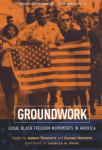 edited by In everyday conversations and often in classrooms, the Civil Rights movement of the 1950s, ’60s, and ’70s is presented in monolithically simplistic terms: Rosa sat down, Martin marched, now we all get along. Not hardly. One truth of the movement that is being exposed more clearly in modern years is that discrimination, segregation, and other forms of bigotry were not only a Southern problem. This fact doesn’t excuse the South’s longstanding practice of Jim Crow, but it does dispel the notion that the South was maintaining a racist culture while other parts of the country were not. The collection of essays, published in 2005, explores thirteen separate social-justice movements in Southern locales, like Alabama and Mississippi, and in cities like Boston, Cincinnati, Milwaukee, Des Moines, and Oakland.
