
A Last Word on the Great Watchlist Purges, 2020 – 2025
Back in 2020, I took on the idea of emptying out my overfilled IMDb watchlist as a way to keep my mind occupied during the stagnation of the COVID-19 quarantine. And the task did that— it kept my mind occupied, searching for and watching the films I had stored there. The main criteria for my watchlist is pretty un-scientific: if I run across a movie that I’d like to watch but either didn’t have the time or the access to watch it, then it gets added. So, if I see something I want to watch and actually watch it right then, it never makes it into the list. But lots of movies do . . . Some come from browsing the streaming sites, while others come from IMDb recommendations. (Very few come from personal recommendations, unfortunately.) These films span a broad cross-section of subjects, styles, and places, so the watchlist has long had an eclectic quality to it, and diving into it sends me down a rabbit hole. During those awful years of cultural anxiety and collective isolation in 2020, 2021, and 2022, I watched a whole bunch of movies . . . and added a whole bunch, too.
As 2023 began, the pandemic had pretty much passed, and the tenor of this semi-maniacal pursuit shifted. It was time to relax and just enjoy watching movies again. Which is what I’ve been doing since. The good part is that keeping up with movies in this way has reinvigorated my love of them in a way that I hadn’t enjoyed since the 1990s, in the days of video rental stores. (I’ve watched many more movies than I’ve written about in these “purges,” but those have been haphazard selections that had nothing to do with emptying the watchlist.) What makes my watchlist particularly difficult is the fact that it is usually stocked with older, obscure, and foreign movies— which is usually why I can’t always find the movies right away. The good news is that the number of movies out there to watch is endless, and I never get tired of finding them.
This post is going to be the last in this series. These years, from 2020 through 2025, have brought great changes to my life, and spending a good bit of time indulging in film has been a helpmate through the changes. Call it escapism or call it reinvigoration, whatever it was it added something good to my life.
Here are the twenty-seven movies in the list that I have found and watched since the most recent post in January 2025. Some have come into the list since that January post, while others had been in the list for a while.
The Conspiracy of Torture (1969)
I added this Italian horror film after seeing it on an old-movies account that I follow on Instagram. The featured actress’s beauty caught my attention, though I watch any Italian film from the 1960s or ’70s with the knowledge that they vary widely in quality. This time, the plot centers on a pair of young lovers in late-medieval or early Renaissance Italy, who want to be together but her father won’t let them. The father is a nobleman and a real jerk – to everyone – and even his allies and friends don’t seem to like him. So, the young noblewoman and her lower-class boyfriend consider a plot to kill him. This leads to severe problems for them, including being tortured . . . thus, the English-language title. (The original title is the young woman’s name, Beatrice Cenci.) This wasn’t a very good movie, though, and parts of it were downright confusing. I had trouble finishing it.
Nadja (1994)
How did I miss this movie? An “ultra-hip, post-modern vampire story” . . . from the ’90s . . . with Peter Fonda in it and a cameo by David Lynch!? Well, I’ve seen it now. The movie is done in black-and-white, its plot is slow-paced, and its dialogue is stylized and deliberate. The story is a twist on the original Bram Stoker novel, but in this one, the count had fallen in love with a peasant girl, who died giving birth to twins. Now, Van Helsing – played by Peter Fonda – is after them in then-modern New York City. With her brother sick, this leaves the female twin to sort things out. This is a particularly GenX take on the classic story, and it easily fits alongside The Addiction, which came out around the same time.
The Killing of a Chinese Bookie (1976)
 What a title! And the title says it all. This is a neo-noir action film, starring Ben Gazara, about a guy who has to . . . kill a Chinese bookie. Gazara’s character operates a burlesque club and is coaxed into coming to a gambling club by some guys who visit his club. Unfortunately, he loses big and owes them $23,000 by the time he leaves – the equivalent of about $125,000 today – so he’s semi-forced into an assassination plot to pay off his debt. Though the character is kind of a jerk, we also don’t like to see him overpowered by mobsters the way he is. The film is very 1970s— the styles, the cinematography, the whole thing. It was a pretty good movie, but I say so because it was effective in being exasperating, how the close-ups help us get to know this guy, how inadequate lighting makes us unsure of what is happening, and how the pacing makes us watch him while he is in over his head.
Bloodtide (1982)
This one, which entered and left the watchlist in recent months, is an English-language horror movie made in Greece, and it stars James Earl Jones and Martin Kove, who a few years later played Kobra Kai meanie John Kreese in The Karate Kid. But this time Kove was the hunky lead who is searching for his sister, an artist who disappeared among the Greek isles months before. In a now-familiar tale, he and his pretty lady find a land lost to time whose inhabitants still sling to the old ways. This includes a monster that lives in an underwater cave and requires the sacrifice of virgins. James Earl Jones’ character is a scuba-diving treasure hunter who blasts open the sealed door that held the monster at bay. As ’80s horror movies go, this film wasn’t bad.
The Living Dead Girl (1982)
We’ve got a few things going here: a 1980s horror film about toxic waste turning someone who was dead into a walking-around flesh-eater, and Jean Rollin directing. On the one hand, I knew Rollin from Shiver of the Vampires, which was bad weird, and also from Fascination, which was good weird. It’s hard to know which kind of film we’ll be talking about when the director’s credits mainly include horror films and pornos. This one was surprising though, because the zombie girl who drinks blood from her victims has enough latent humanity to phone her best friend, who comes and tries to protect and save her. The pretty blonde zombie girl then becomes kind of a noble savage, in some ways like a Frankenstein figure— a monster who doesn’t want to be what she is. This movie wasn’t great, but it was more interesting than I thought it would be. (Spoiler alert: she kills the friend in the end.)
Noises Off . . . (1992)
I’m not a guy who enjoys the comedies of the theater as much, but my older brother suggested to me that this film adaptation of the classic stage play is particularly good. He’s a long-time theater guy, so I trust his judgment enough to spend two hours watching a movie I might not otherwise choose. The story here is a play about a play being put on, so it’s easier to get the humor if you’ve ever worked in theater. Michael Caine and Carol Burnett star, a handful of 1980s mainstays like Christopher Reeve, John Ritter, and Marilou Henner. The one thing I will say about this story is that the timing of the actors was absolutely impeccable. This is a very physical kind of comedy, and missing a beat would matter. (In fact, some of the jokes are about that very thing.) Glad I watched this one: a little dated but high energy and definitely funny.
 State and Main (2002)
Another one in the same vein, this one being a movie about making a movie. Philip Seymour Hoffman plays a playwright-turned-screenwriter whose script is being adapted by production company, but almost nothing goes well. William H. Macy plays the director, who can’t seem to get a break. The crew has to move unexpectedly to a new filming site, and most of the locals want them there but the town basically can’t accommodate them. This is a good movie, about as close to a GenX rom-com as it might get, with the unsure writer falling in love with cute girl from the small bookstore, all while the Hollywood shit-show implodes nearby.
Maybe I’ll Come Home in the Spring (1971)
A made-for-TV movie starring Sally Field as a hippie girl who comes home to her square middle-class family after being on the road for a while. When she gets home, she finds that she can’t identify with her old life, and she also finds that her younger sister is using drugs to get hip with the times. Aside from that, she has parted ways with her hippie boyfriend, played by a young David Carradine, and he later tracks her down in suburbia to ask her to move to Canada with him. There’s not much to this movie, it almost seems like they tried to make a ninety-minute movie out of thirty minutes worth of story. Ultimately, it’s a cliffhanger as the little sister is out on the streets, while Sally Field’s character is at home. It begins and ends with the parents’ treatment of their two daughters being similar enough to yield the same result— a cautionary tale, maybe. This movie smacked of similar movies from the time – two other films from the year before were Joe or The People Next Door – in which a family loses their kids to that mean old counterculture.
Panic in Needle Park (1971)
This one goes back to the first Great Watchlist Purge in 2021. It was not available on any streaming services, so I cut it as one that I would probably never find. Then it popped up on Amazon Prime recently! This film is bleak and full of harsh realism. The story shows the downward spiral of two New Yorkers, one a street hustler (played by Al Pacino) and the other a transplant from Indiana. They meet when he is delivering weed to an artist, and she has just gotten home to the artist’s studio after having an abortion. They end up together, but things just get worse and worse for the couple as the movie goes on. I’m glad I found it and that I watched it, but the lack of an arc in the story and the lack of anything redemptive made it kind of depressing.
The Legend of Hillbilly John (1972)
I found this movie when I was writing my quick tribute to RG Armstrong, and the description was too tantalizing to pass up: “A wandering ballad singer in the Appalachians meets an ugly bird-type creature, is transported back in time, finds himself involved in the Devil’s work.” I knew immediately that it might be good weird, and it might be bad weird. The story starts out with an orphaned man living in the mountains with his grandfather (who is played by Denver Pyle, aka Uncle Jessie from The Dukes of Hazzard). The old man challenges the devil at the local still and dies because his guitar strings aren’t real silver. That sets off a chain of events that takes our protagonist up on the mountain where he is put on a quest that includes almost being snatched up by the Ugly Bird and taking on a voodoo master who cheats the laborers picking his cotton. What is interesting about this movie is that, instead of a normal narrative arc, it takes on a mythic cause-and-effect narrative structure, in which one thing leads to another. First his grandfather dies, which leads him to dig up his family’s buried silver, and that leads him to quarrel with the local rich dude, which leads him to take the guy up on the mountain, where they meet the jilted lover of that guy’s grandfather, who puts him on the path toward the Ugly Bird, then . . . The way the story is structured is a lot more like ancient epics than modern stories. It’s still not a very good movie, but that aspect of its structure is interesting.
Kiss the Ground (2020)
This documentary on healthy soil and sustainable farming was very well done. I’ve composted at my house for about twenty years and grew up using what are now called “sustainable” methods in our family gardens. These efforts were particularly good to see, since so much of the news these days is doomsaying. Here, we see farmers using responsible practices that are working for them, and they’re going out to teach and advocate for others to do the same. I’ve seen where Woody Harrelson, who made this documentary, has made another called Common Ground, and I may well go look for that one, too.
The Pied Piper (1986)
This folk horror film came up as an IMDb suggestion among other films I have watched in the same genre. Under country of origin, two are listed: Czechoslovakia and West Germany. The last 1980s Central European folk-horror film that I was watched was Alice, and it was odd for sure. This movie is also stop-motion animated, though most of the people and scenery appear to be carved from wood in Pied Piper. There is virtually no dialogue, although the story is carried by a combination of gibberish-like speech sounds and an ongoing musical score. (In that respect, it was a little like watching Prince Achmed.) The fact that the description says “with a twist” made me want to watch it. In this telling of the tale, the village is overrun by rats, and the Pied Piper comes to carry them away with this tune. But then, the powerful leaders of the village double-cross him by reneging on their deal to pay him, then they break into the home of the young woman who has fallen in love with him to rape and kill her. After that, he uses his pipe to turn them into the rats that they always were and leads them to their deaths just as he did the first batch of rats. An ominous end for them.
All the Colors of the Dark, or They’re Coming to Get You! (1972)
This movie had been in the watchlist since the beginning. In fact, I had been interested in finding it for decades. I have memories of seeing this movie on USA Network’s Saturday Nightmares in the 1980s, but every list on the internet doesn’t include this movie as having been shown on that program. That weird old program turned me on 1960s and ’70s European horror movies, and I could have sworn this one was on that show. No matter, I haven’t seen it in a long time and wanted to re-watch it. However, the full movie with English subtitles was very difficult to find, which is strange considering that Edwige Fenech’s other movies, like The Strange Vice of Mrs. Wardh, which also stars Ivan Rassimov, are more widely available. At one time, one streaming service had All the Colors of the Dark but said it was not available in my area. At another time, a YouTube channel had the original Italian-language movie . . . but I don’t speak Italian. The DVD has also been available. Finally, Dailymotion had the English-language version! I haven’t seen a lot of Italian giallo movies, but of the ones I’ve seen, All the Colors of the Dark is one of the better ones. It is psychological and suspenseful and weird. Ultimately, it’s a story of greed, but the twists and turns, alongside the close-ups of Rassimov’s weird blue eyes, are pretty effective to keep viewers on their toes.
The Legend of the Seven Golden Vampires (1974)
I saw this as a suggestion within one of my lists and thought, Holy shit, are you serious? A Peter Cushing vampire movie mixed with a Chinese martial film, in the mid-1970s! I’m not a huge fan of Peter Cushing – I kind of feel about him like I do about Christopher Lee: OK, I get it, this is what he does – but this premise is too good to pass up. It lived up to what I thought it would be, but I will say that it seemed more like a movie from the ’60s than from the ’70s. The orchestral background music setting the mood, somewhat uptight costuming, and terse dialogue are cinematic stylings that were being left behind by that point.
Electrick Children (2012)
Not new but kind of, this film’s description was tantalizing: a young woman raised as Mormon believes that a tape player got her pregnant, so she goes looking for the father. I ran across this film in the listings on Amazon Prime and paid attention because the title reminded me of Philip K. Dick. The main character has a quietly intriguing kind of joi de vivre and an innocence that keep the tension going— you just know while you’re watching it that something bad will happen to her. It’s also impossible to tell what will happen to her, because an ordinary viewer knows that she can’t be pregnant from listening to an audio tape, so . . . is she actually pregnant?
Only Lovers Left Alive (2013)
I seem to have noticed more vampire movies than usual this year. In this case, the movie was brought to my attention when Birmingham’s Sidewalk Film was showing it, though I didn’t see it there. This is a Jim Jarmusch movie. Which means a few things: slow pacing and very little plot. Jarmusch’s movies tend to center on character and mood, and this is very much in that vein. As it started, I was impressed by it as a work of art, as a cinematic production, but after about an hour, I was like, OK, I get it, they’re cool vampires. They’re struggling to find blood and they’re tired after centuries of life on Earth. That made it hard to watch the second hour. I’m not sure that I remember what happened . . .
The Vourdalak (2023)
With a story adapted from a short story by Leo Tolstoy, this relatively new film is the debut by a young French director. One reviewer on IMDb wrote that it reminded him to a Central European movie from the 1970s. Throw all that into the mix, and I was hooked. What was nice about the film was its simplicity: very few characters, one setting. The monster was pretty hokey but it could have been that quality that makes the viewer ask, Why don’t these people see what’s right in front of them? Ultimately, it ended up being kind of a love story. Good movie!
The Man Who Fell to Earth (1975)
As a big fan of 1970s movies, I can’t believe that I’d never taken the time to watch this one. On the other hand, of all the ’70s music, Bowie is not one of my favorites. What caught my attention, to add this one to the list, is that Adrienne LaRussa, the female lead in Conspiracy of Torture, is in this movie, too. (She ends up being a very minor character.) Considering rock n’ roll movies like Tommy, Phantom of the Paradise, Zachariah, etc., I knew that I should give this one a look. But when I did, it had nothing to do with rock n’ roll. Adapted from a 1963 novel of the same name, the film follows an alien who comes to Earth to take our water back to his planet. To do this, he becomes Tommy Newton, a supposedly British businessman – an eccentric and elusive one – to get the job done. This job includes a disgruntled professor, played by Rip Torn, who has tired of lechery and grading papers and who now wants to do real work and make a difference. Tommy also meets a pretty young woman. She attempts to have a relationship with him, but his odd behavior makes that very difficult. The tangled mess culminates in Tommy almost meeting his goal but being thwarted by the government, which kidnaps him and experiments on him for years, until he escapes. This is a weird ass movie with quite a few weird ass sex scenes. I think it would have been easier to like this movie if I liked David Bowie more than I do.
Zardoz (1974)
Another weird ass movie. The premise here is that Sean Connery’s character, who dresses like a profession wrestler, was a killer for a god-like figure named Zardoz, who told his disciples that being dead was better than being alive. Zardoz is a big flying male head, and after it lands, it talks for a moment then vomits up a whole bunch of guns. Somehow, Connery’s character has climbed inside of the flying head and gone to this dystopian place where there are three classes of people: the sexless yet somehow Dionysian people in charge, a bunch of haggard former businesspeople who live in a perpetual banquet event, and the Apathetics, a bunch of women who are depressed to the point of inaction. The group in charge can’t seem to figure out what to do with or about Connery or how he got there. The whole thing is just plain weird and doesn’t make much sense. It kind of reminded me of Logan’s Run combined with Jodorowski’s Holy Mountain, and its level of strangeness I would compare to films like Black Moon or House. I recommend this highly to a fan of obscure films, but to the average movie fan, no.
Two Orphan Vampires (1997)
This movie was just plain bad. Imagine Twins of Evil meets Girls Just Wanna Have Fun set in the 1990s. I thought I knew what to expect from Jean Rollin, and some of it was there: his style of delivering dialogue, longer scenes, vampire motifs. And don’t get me wrong: it was not the lack of sex and nudity that was disappointing here. This movie was bad, because it required watching two teenage girls galivant around for no apparent reason then periodically attack an unsuspecting person. Rollin should have rested on his 1970s laurels and refrained from making this one.
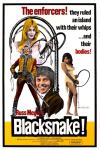 Black Snake (1973)
I couldn’t imagine what you’d get if Russ Meyer – the king of exploitation films that feature women with big boobs – made a movie about a slave rebellion. This one is not purely sexual, like Beneath the Valley of the Ultra-Vixens or Up!, but it has those overtones. Though it is a more unconventional film, it kind of reminded me of Roots, which was on television several years later in 1977. But Meyer’s treatment was not as sanitized for mainstream audiences. The Caribbean island, where the sugar cane plantation is, is run by ruthless beautiful woman and her henchman, who is a wild-looking black homosexual with a mane of dreads. We have our brutal overseer character, and if there is a hero, it’s the handsome young bookkeeper who arrives to set the accounts straight. This is not a great movie by any stretch, yet there is a more coherent story that has less to do with sex.
Blue Collar (1978)
Richard Pryor in the late ’70s. That alone was enough to get it on the list. Then I turned it on, and here came Yaphet Kotto and Harvey Keitel, too. This was a bleak and bitter film about the struggles of working-class men. Three friends, all workers in a Detroit auto plant, get the idea to rob their union’s safe to get the cash that is kept there. Two of the three are family men with financial issues to solve, and the third is a freewheelin’ ex-felon who knows how to get the job done. Ultimately, they get in over their heads, and each man pays a price. The end of this film is particularly bitter as racial tensions join the working-class economic issues at the forefront. Good movie – quite good, really – but dark.
Dixie Dynamite (1976)
Once again, I found this movie when I was looking up some things about RG Armstrong, but this time, the star is a mid-1970s Warren Oates. I started to like Oates in the 1980s when he played the drill sergeant in Stripes, then that affinity was augmented when I watched his performance in Two Lane Blacktop. I’ve learned from watching a lot of old movies that a good cast doesn’t necessarily mean a good film. But I’m a Southern movies guy and a Warren Oates guy, so I gave this one the benefit of the doubt. But it turned out just to be a cheap exploitation film. It’s supposed to be Southern but there’s a lot of California there. A couple of the characters had decent Southern accents, the music was mid-70s country, and moonshine was part of the story . . . but beyond that, calling this movie Dixie Dynamite was a ploy for whatever drive-in audiences went to see it.
Wild Thing (1987)
Even though I’m a fan of GenX films, this is one I had never seen or heard of at all. It gets a decent 5.2 rating on IMDb and has some of those actors we all recognize but don’t know their names, like Robert Davi (the bad guy in Goonies who would break into operatic singing) and Maury Chaykin (one of the inept witnesses in My Cousin Vinny). The star Rob Knepper was in Where the Day Takes You and Gas Food Lodging. Overall, this was a very dark movie. The plot centers on a kid whose parents were a couple of hippies who get murdered by the street thug and a cop working in cahoots. The child escapes, though, and grows up with a paranoid/delusional woman who teaches him to fear normal society and the government, calling them “the company.” By the time the boy grows up, it’s the ’80s, and he’s become an urban legend: the wild thing— part scavenger, part vigilante. He ends up being outed when he saves a girl from a burning building, but he also escapes the cops, who thinks he set the fire. I’d say this movie is one part Turk 182, one part Times Square, and one part Breakin’.
Disco Pigs (2001)
One of Cillian Murphy’s early films. He has a been one of the stars du jour since Oppenheimer, which I haven’t seen, and this came up in a segment about him in a news show I was watching. It looked promising . . . and it lived up to that promise. The premise was remarkably unique – two Irish teenagers who had been side by side since their births and who were a little too “connected” to each other – and the storytelling bore out the premise. Quirky and offbeat, for sure, and kind of dark, too. Ultimately, it’s a love story, albeit an awkward one, and one that the two lovers don’t, at first, realize they’re in— until Murphy’s character realizes that he gets jealous when she talks to other guys. If I have anything negative to say about this film, it’s this: in some scenes, the thick Irish accents were hard to understand for an American viewer. That’s not really a criticism, but it did hamper my ability to fully understand and enjoy it.
The Conversation (1972)
I had no idea that this movie existed until recently when I saw it listed as, possibly, one of the best films ever made. I knew it star Gene Hackman from The French Connection, Hoosiers, and other films, but this one – which won a bunch of awards – had escaped me. Set in early 1970s San Francisco, the story follows a lonely surveillance expert who has been hired to record a conversation between a man and a woman, who we presume quickly are romantically involved. This job is murky, since he can’t figure out why he’s recording them, nor what they’re talking about. We later learn, in the back story, that his work was once used to set up the murders of a family, and that guilt leads him to have second thoughts about turning in his tapes and his photos. Of course, the people who’ve paid him to do the job aren’t happy about this. They don’t want to keep their money and let it go; they want the info he has collected. Like a lot of suspenseful/thriller movies from this era, the pacing is pretty slow in the beginning, but it picks up. One way to build tension is to make a viewer wonder what their watching and why, which inclines some people to give and turn it off, but sticking with it anyway leads to a payoff when the revelation comes. This film is very much one of those cases.
Rawhead Rex (1986)
Another film that came my way through Woodlands Darks and Days Bewitched, a documentary on the folk horror subgenre. This one is British, with its story centering on a small countryside community where a farmer has unwitting released a devil-monster while trying to remove a monolithic stone from his field. At first, it seemed like a relatively unoriginal monster movie, where the creature goes from place to place killing random people for no apparent reason. But it got a lot better when I saw the connections to a local church and the eventual revelation that its burial in the first place was a triumph of Christianity over paganism. The payoff comes late on this one, but it’s there, when all the working parts are coming together: monuments, monoliths, idols, nature, gender, all the things.
And here’s the current watchlist as it stands today, with forty-four films. One of them has been in the list since the beginning: Personal Problems. In today’s list are six from the 1960s, fifteen from the 1970s, five from the 1980s, eight from the 1990s, two from the 2000s, six from the 2010s, and two from the 2020s.
Personal Problems (1980)
This film about complicated African-American lives in the early ’80s has been particularly evasive and also obscure. It came up as a suggestion after I gave a high rating to Ganja and Hess some years ago. The script was written by Ishmael Reed – whose From Totems to Hip-Hop anthology I’ve used in my classroom – and the description says “partly improvised,” which means that the characters probably ramble a bit. Other than Ganja and Hess and this film, there is only one other film that Bill Gunn made: Stop!, which was never released. (His other work mainly involves the Man from UNCLE television series.) I still hope to find this movie, Maybe it will end up on one of the streaming services eventually.
The Burning Moon (1992)
What fan of strange horror films could resist this description of a German film made in the 1990s: “A young drug addict reads his little sister two macabre bedtime stories, one about a serial killer on a blind date, the other about a psychotic priest terrorizing his village.” The information on it says that it is really gory, which doesn’t interest me as much as tension and suspense do, but I’d like to see this for the same reason that I wanted to see House before.
After Sun (2022)
This was one of the movies suggested as one of that year’s best in a December 2022 PBS NewsHour segment— two and a half years ago. After Sun tells the story of a woman looking back at her father and trying to reconcile the man she knew with aspects of his life that she didn’t know about. It has been two-and-a-half years, and I still haven’t watched this.
A New Leaf (1971)
Walter Matthau stars in this comedy about a young guy from wealthy family who has blown through his inheritance. He is lazy and has no employable skills. His solution is to find a rich wife within six weeks . . . then kill her. This appears to be one of those quirky films that popular actors have, which fall between their memorable performances. In this case, A New Leaf came out between The Odd Couple and The Taking of Pelham One Two Three. I always think of Matthau as Buttermaker in The Bad New Bears, which is funny because in 1971, he was playing a bachelor looking for a wife . . . then five years later, he was playing a washed-up drunk.
Loving Couples (1964)
This Swedish film’s description says that it has three pregnant women recalling their sex lives. It’s a strange premise. The only Swedish films I can recall seeing are both classics from the late 1950s: Wild Strawberries and The Seventh Seal. Those are both by Ingmar Bergman, and this one is by a female director named Mai Zetterling, who I’m not familiar with. The fact of a film with that premise being directed by a woman also makes it interesting to consider.
Chelsea Girls (1966), Blue Movie (1969), and Cleopatra (1970)
Anyone familiar with Andy Warhol’s work knows that his interest in the mundane can often lead to some real boring “art.” But he also made those wild adaptations of Dracula and Frankenstein that had Joe Delassandro in them. So Warhol kind of weaves back and forth between two different kinds of “What am I watching . . . ?” All of three these were made by Warhol, and some (or all) may not be worth watching. But it’s Andy Warhol, so I’ll roll the dice.
Seven Beauties (1975)
I added this film after the multi-part documentary Women Make Film: A New Road Movie through Cinema noted that this one marked the first time a female director was ever nominated for an Academy Award for Best Director for Lina Wertmuller.
The “A Ghost Story for Christmas” episode of Lost Hearts (1973) and Dust Devil (1992)
Both of these came my way through Woodlands Darks and Days Bewitched, a three-hour documentary on the folk horror subgenre made in 2021. Some of the movies they discussed were American, but many were European and Japanese. Lots of them looked like they could be good, but who knows which ones might be available here and now. When I saw the documentary, I’d already watched Dark Waters, which came up in a search soon after I added these to the list. Also, I recognized a couple of them, like Leptirica, and have managed to find a few so far.
Midsommar (2019)
I started watching this movie a while back but turned it off, because it was really slow in the beginning. Then a friend was talking about it and was surprised that I had given up on it so easily, remarking that it’s a particularly good movie. So I added it back.
Alice in Wonderland (1976)
I had this movie in the watchlist at one point before, out of my affinity for Hy Pyke, and I ran across it again while searching for the 1988 eastern-European Alice that I had just watched. It sounds like this movie could be a soft core porn film, or it could just add sexual overtones to the story— given the quirkiness of the 1970s and the oddball cast, I’d like to see what they did with the story here. But the likelihood I’ll ever find this movie is pretty slim.
Je t’aime moi non plus (1976)
This is a French film that came up as a suggestion after I watched Going Places (Les Valseuses). Its description actually reminded me of 2016’s Katie Says Goodbye: “Petite waitress Johnny works and lives in a truck-stop, where she’s lonely and longs for love.” The French titles translates to “I love you, me neither,” which is awesome. Gerard Depardieu is in this one, as well, so we’ll see.
The Crossing Guard (1995)
In the 1990s and early 2000s, Sean Penn made a series of good movies that could be regarded as indies (simply because they weren’t really big box-office kinds of films). There was The Indian Runner in 1991, this film in ’95, and The Pledge in 2001, followed by 2003’s Mystic River, which starred Penn and was directed by Clint Eastwood. Of those four films, three pop up pretty regularly in streaming services but The Crossing Guard, not so much. I saw it when it came out, at our local independent movie theater, but that has been thirty years ago. I’d like to watch it again.
Losing Ground (1982)
I stumbled on this movie while I was looking for Personal Problems. Bill Gunn didn’t direct this one but was an actor in it. The director Kathleen Collins was an activist in the 1960s who, her IMDb bio explains, “travelled to Georgia with SNCC.” She only made a couple of films and died of cancer in her forties. I’ll be curious to see what this film has in it.
The Dark Secret of Harvest Home (1978)
I found this one and the three after it using IMDb to search for the term “folk horror.” A few films like Leptirica and Hagazussa prompted me toward this kind of story. Then, since seeing Woodlands Darks and Days Bewitched a while back, I’ve enjoyed the films I’ve found. In this case, a TV mini-series follows the 1970s/1980s motif of the creepy New England town where things aren’t as they seem. Reminds me of some of Stephen King’s storylines, like Salem’s Lot. Which it should since it’s also based on a novel, this one by Thomas Tryon. An older Bette Davis and a young Rosanna Arquette star this time.
The Rain People (1969)
Francis Ford Coppola directs, and James Caan, Shirley Knight, and Robert Duvall star— great line-up. The plot is about a wife who runs off when she realizes that she’s pregnant. Late 1960s . . . could mean anything in terms of story.
The Cake Eaters (2007)
I put this movie in the list when it was recommended on IMDb after I watched The Yellow Handkerchief, which was a really good movie. The movie stars Kirsten Stewart, who I hadn’t really paid attention to because I associated her with the Twilight franchise. But she proved to be really good in The Yellow Handkerchief, so I want to give this one a chance. The description says, “Two families are brought together by the return of one family’s son – a reunion that conjures up old ghosts and issues that must be addressed.” Sounds dramatic, and promising.
Starve Acre (2023)
Another folk horror film, but this one is very recent. I don’t watch many new movies – to me, two years old is “new” – but the tagline caught my attention: “An idyllic rural family life of a couple is thrown into turmoil when their son starts acting out of character.” This one is British, and I’m not familiar with any of the actors or the director.
Savage Nights (1992) and The Apartment (1996)
I came across these two movies when I went down a rabbit hole while looking for the 1995 film Total Eclipse, about poets Arthur Rimbaud and Paul Verlaine. Both of these movies star Romane Bohringer, who played Verlaine’s wife in Total Eclipse. The first of the two is apparently very sexual in nature, since some of my web searches listed it on adult websites. Given the sexual content in French films like Betty Blue or Blue is Warmest Color, who knows why the distinction— that is to say, why some films with explicit scenes are shown on mainstream channels and other aren’t. But it also may mean that I’ll never find it on a mainstream service. The latter looks to be the story of an older man who wants to meet his young mistress again after their affair has ended. Once again, who knows if I’ll find either one, with subtitles of course.
The Witch (2015)
This movie came up in my “Recommended for You” list on Amazon Prime, then it went away. I tend to avoid current horror movies because most tend to be either formulaic or too heavily reliant on computer-generated visual effects. (To me, horror movies are about the fears and mysteries that make us uneasy, not about startling us or making us jump.) But a closer look at this one inclines me to think it might be more to my liking than I originally thought. It kind of looks like M. Night Shyamalan’s The Village.
A Love Story (1970)
Not to be confused with the sentimental American film Love Story, this Swedish film came to my attention through an Instagram post. The guy who posted was a cinematographer, and he said this is one of his favorite films. I had never heard of the cinematographer who made the comment, but his credits were good films that I recognized, so I added this film that he praised.
Love with a Proper Stranger (1963)
By the time this one was suggested by IMDb, the “love” theme was dragging me in some old directions and some new ones. Natalie Wood and Steve McQueen star in this film about a one-night stand that results in a pregnancy, but the guy – who is a musician – does not remember the girl. Back in the early 1960s, that would have been a huge thing to deal with. Moreover, the stars were both at their peak when they made this film.
Lips of Blood (1975)
I came across this one alongside Two Orphan Vampires. Both French movies, both involve a pair of young women, one from the ’90s, this one from the ’70s. Neither film has a high rating on IMDb. But I thought I’d give either or both a chance. Two Orphan Vampires was terrible. This one is also directed by Jean Rollin, but since his Fascination was a good movie, made around the same time as Lips of Blood, I’ll keep this one in the list.
Bitter Moon (1992)
I read that this movie was one of Roman Polanski’s best films. One must admit that he does great work – Rosemary’s Baby, Chinatown, The Pianist – but then there’s also The Fearless Vampire Killers, which was one of the stupidest movies I’ve ever seen. So, I guess I’m saying that he’s not batting 1,000. This one has Hugh Grant and Kristen Scott Thomas, as well as Emmanuelle Seigner, who was excellent in Polanski’s Frantic.
The Sentinel (1977)
In the 1970s, the film industry loved a story based on a person who unsuspectingly moves into a new place that has some evil shit happening there. It was the basis for now-famous movies like The Amityville Horror and Burnt Offerings. This is another in that vein: a young woman moves into an apartment having no idea about what is in there. And this one has some great actors in the cast: Ava Gardner, Burgess Meredith, Eli Wallach, Christopher Walken, Beverly D’Angelo.
Candy Mountain (1987)
A failed musician goes looking for an old guitar maker. This one could be a hidden gem. The main character is Kevin J. O’Connor, a recognizable but lesser known 1980s actor, and the movie co-stars Robert Joy, who played the real Susan’s real boyfriend Jim in Desperately Seeking Susan a few years before this movie. The cast list also contains some great names – Joe Strummer from The Clash, David Johansson from The New York Dolls, Rockets Redglare, and Tom Waits – and the film’s writer also wrote Two Lane Blacktop and Pat Garrett & Billy the Kid in the ’70s.
River of Grass (1994)
The woman who made this movie, Kelly Reichardt, also made Wendy and Lucy, which I thought was quite a strong film. (I can’t say that I liked or enjoyed it, but it was a stark portrayal of a woman with no money whose car breaks downs as she crosses the country and she can’t afford to fix it.)
Crazy, Stupid, Love (2011)
One day, sitting at the bar, I was telling my older brother how I don’t really like watching modern movies with love stories, because they all seem to be about two people meeting and realizing they want to be together, and now at my age and married for nearly twenty-five years, that story just doesn’t interest me. He suggested this movie anyway, and despite my protests, he insisted that I should watch it. His last suggestion, the 1992 film adaptation of Noises Off . . . , turned out to be a good one, so I’ll give this a chance.
The Discreet Charm of the Bourgeoisie (1972)
The great Luis Buñuel, who made Un Chien Andalou in 1929, made this one in the years after writing Belle du Jour. I knew the title of this movie but have not seen it. Thought it might be time!
The Devils (1971)
Last summer, I started following the Instagram account of the Criterion Channel and have gotten some good suggestions from its posts. This is a film I had heard of but not seen. The director Ken Russell made the film adaptation of DH Lawrence’s Women in Love a few years before making this one, and then made Tommy a few years after.
The American Friend (1977)
Another that came from the Criterion Channel’s Instagram, this one by Wim Wenders and starring Dennis Hopper. Those things alone get it on the list.
I Believe in Unicorns (2014)
I’m a sucker for a road movie, though at this point in my life, I’m not much into a love story. The only reason that I put this movie in the watchlist is that the word “poetic” is in the description. That usually – but not always – means that there’s some interesting imagistic storytelling.
Tree of Life (2011)
This family drama set in Texas stars Brad Pitt and Sean Penn. I ran across this one and in reading the reviews, one called it a “rare kind of film,” while another said this “existential and experimental drama is something special.” I’m always looking for rare gems, and this might very well be one. I’ve been a fan of Sean Penn since seeing At Close Range as a teenager, so I’m partial to anything he’s in anyway.
Fat City (1972)
Directed by John Huston, this film about two boxers stars Jeff Bridges and Stacy Keach.
Scott Pilgrim vs. The World (2010)
I’ve been aware of this film for a long time, but the prejudice that has pushed me away from it is this: it seems to be some Millenials’ attempting to make a GenX movie. Knowing that the Boomers has some great youth zeitgeist films, like The Graduate, it is still arguable that GenX’s films of this sort were the best. Maybe it’s that I was married with two kids by this time this film – which involves a young guy reckoning with ex-girlfriends – came out, I just wasn’t in the frame of mind for the story. Yet, today, past 50, I’m going to open my mind to the possibility that this could be worth watching.
One Fast Move or I’m Gone (2008)
After running across the Bill Paxton film One False Move, it dawned on me by way of association that I have never watched this documentary on Jack Kerouac. The soundtrack was done by Jay Farrar of Son Volt and Uncle Tupelo and Ben Gibbard of Death Cab for Cutie. The songs were based on parts of Desolation Angels, which is my favorite of Kerouac’s books. But somehow I’d never watched the actual movie.
It (1990)
For a film buff and an outspoken horror movie fan and a GenXer, it seems odd that I’ve never watched this whole two-part movie. It could be that was a made-for-TV that came out when I was a teenager, not really interested in coming-of-age stories at that time. Of course, I know the character Pennywise, since he’s an omnipresent figure in American horror. But I thought it was time that I sat down with this movie and experienced it.
Fool for Love (1985)
Sam Shepard was just cool, possibly the most underrated and under-appreciated cool actor we’ve had. This film is based on one of Shepard’s plays, and he starts in it. I read the play years ago, but somehow this adaptation has escaped my attention. Kim Basinger plays opposite Shepard, and another of my favorites Harry Dean Stanton is here, too. (For Stanton, this film was released between Paris, Texas and Pretty in Pink.)
The Marriage of Maria Braun (1979)
This German film was made by Rainer Fassbinder, the director who adapted Jean Genet’s Querelle a few years later in 1982. It deals with life after World War II in Germany, when the country was trying to get back on its feet in the 1950s. The main character is a woman struggling to find a way to live. This one may not be one I end up liking, but I’m willing to give it chance.
After Hours (1985)
Martin Scorsese made this mid-1980s night life film about an ordinary guy who has “the worst night of his life.” The premise reminds me of the Bruce Willis movie Blind Date from around the same time. ’80s mainstay Griffin Dunne plays main role, and Rosanna Arquette is female love interest. This movie came out about the same time as Desperately Seeking Susan, and the fact that one was a hit may have pushed this one under the radar.
The Golden Fern (1963)
I ran across this film on the Tubi app, had never seen or heard of it before. It’s from Central Europe, and its description reads: “Czech fairy tale about a shepherd who finds a golden fern with magical powers.” We’ll see— like any semi-animated Central European folktale movie, it could be good weird, could be bad weird.
And these are the ones that I’ve given up on and cut from the watchlist:
Valérie (1969)
Not to be confused with Valerie and Her Week of Wonders, this film is a Quebecois hippie film about a naive girl who comes to the city to get involved in the modern goings-on. This one came up as related to Rabid, which is a horror movie, and only has 5.1 stars on IMDb— it may be a clunker. I’ve waited for quite some time for it to appear some place so I could watch it. But it hasn’t so I may never know.
Richard III (1955)
This movie came up as a suggestion after I watched Richard Burton in a late-1960s adaptation of Marlowe’s Doctor Faustus. This mid-1950s adaptation of one of Shakespeare’s histories was produced by, directed by, and stars Sir Laurence Olivier. Sir John Gielgud and Ralph Richardson co-star. (As a GenXer, my main association for the latter actor was his role as the old wizard-teacher in Dragonslayer.) I like Shakespeare’s plays but I have to be in the mood for them. Between working in theater when I was younger and teaching twelfth-grade English for years, I’ve read, taught, watched, or worked more than a dozen of his thirty-seven plays. I never ran across this one to watch it and feel like I can set it aside.
The Conformist (1970)
I’ve like Bernardo Bertolucci since I watched Stealing Beauty in the 1990s. But I’m not really into movies about Nazis, so I had ignored this movie until it came up in a show about movies that referenced Nazi movies like The Damned. The critics on that show kept saying that The Conformist is a great movie. I gave Bertolucci’s overly long 1900 a chance, but I never did get around to watching this.
La Notte (1961)
Jeanne Moreau and Marcello Mastroianni star in this early 1960s Italian film about an “unfaithful married couple.” It is highly rated on IMDb, and the first of several reviews is titled “cruel, dark, and harsh.” This director Michelangelo Antonioni also made Blowup (1966), which I didn’t like because its main character was not likable and there was virtually no plot. He also made The Passenger (1975), and I only watched the first twenty minutes or so of that film and turned it off, because it also seemed to have no plot . . . I’m choosing to be closed-minded about his work now and am giving up on this one.
The Sorcerer’s Apprentice (1978)
This one is a Czechoslovakian animated movie that was apparently adapted from a book. The description reads, “A young boy becomes an apprentice for a mysterious sorcerer, working at the sorcerer’s strange and sinister mill where secretive black magic is being taught and performed at a very heavy price.” Looking at a preview, the style of animation in the still images reminds me a bit of the adaptation of The Hobbit from the late 1970s, which I loved as a boy. I’m trying hard not to connect them in my mind, since they’re not related and probably not similar. The movie was actually available on YouTube, but the subtitles don’t line up with the line-up with the dialogue; they’re a few moments too early, which made it hard to follow.
Sukkubus (1989)
This West German film from the late 1980s is set in the Alps, where a group of guys are tending to their cattle. They make a female doll out of scraps, and it comes to life. Once again, folk horror, but . . . we’re also talking about Central Europe in the 1980s. So, who knows what this’ll be like. I actually found this one on YouTube but it was in German, no subtitles.
Over the years, I had also been keeping an eye out for these movies that I had previously cut from the watchlist in 2021 and 2022. Of the original eighteen, I actually found and watched several that I once cut. But most of them have remained in the discard pile.
Dusty and Sweets McGee was from 1971 and is about hardcore drug users. I generally liked movies from the early 1970s, but didn’t put much effort into finding this and Panic in Needle Park after watching Born to Win, which was not a good movie. I ended up finding The Panic in Needle Park, which has Al Pacino, and it was a good movie.
The inclusion of Mountain Cry (2015) was kind of a fluke. It came up when I searched the term ‘haiku’ on IMDb once. It appears to be a beautifully filmed Chinese drama about a family in a small village, but getting an American version doesn’t seem possible.
Two by director Carlos Mayolo, The Vampires of Poverty (1978) and La mansion du Araucaima (1986)— both look intriguing. Vampires of Poverty is fictional but made to look a documentary about the poor. The latter is about an actress who wanders off a film set and into a weird castle. I did find an original Portuguese-language version of the latter online, but that didn’t help me much.
The title of 1985’s Alabama lured me in— because it’s not about Alabama, the state where I live. The film is Polish, and one of the posters says “love story” on it, so I’m guessing that it’s a love story. I was mainly curious why it’s titled Alabama, but I’ll probably never find out.
The Night They Robbed Big Bertha’s (1975) has been hard to find, but from the previews, it looks awful. This one made it into the list because, along with Smokey and the Good Time Outlaws, it seems like a great example of 1970s Southern kitsch, that goofy comedy sub-genre that spawned Smokey and the Bandit and The Dukes of Hazzard.
The Girl Behind the White Picket Fence (2013) was one that I found in a search for Udo Kier, who I’ve liked since seeing Andy Warhol’s versions of Frankenstein and Dracula when I was in high school. The cinematic style of this one looks pretty cool, as does the story. Unfortunately, the only way that to get his film is by buying it.
Endless Poetry (2016) was actually in my Netflix DVD queue when they stopped sending movies them. Alejandro Jodorowsky is hit-or-miss for me. I liked The Holy Mountain and Santa Sangre but not El Topo. This movie about him is supposed to be done in his strange style.
Three that were disappointing not to find were: Beginner’s Luck (2001), Tykho Moon (1996), and White Star (1983). The first two star Julia Delpy, who was one of my 1990s celebrity crushes after I saw Killing Zoe and Before Sunrise. (The other was Hope Sandoval, singer for Mazzy Star.) These movies look very different from each other, and Delpy is the common element. This third is a biopic, directed by Roland Klick, and it has Dennis Hopper playing Westbrook, the rock journalist.
Last but not least, there is The Earth Will Swallow You (2002). How has a guy who loves Widespread Panic never seen this concert film? Ridiculous. It’s partially my fault, since you can buy a DVD on Amazon for under $20. However, clips are easy to find, but not the whole thing. I think I’ll just be satisfied with the clips.
Read more
The Watchlist Still Lives!
January 2025
The Watchlist Lives! (The Great Watchlist Purges, part . . . whatever)
July 2024
The Great Watchlist Purge: The Finally Final of Final Reports
July 2023
The Great Watchlist Purge: Fin
December 2022
The Great Watchlist Purge: As Done as Done is Gonna Get
September 2021

this is a long list…and I’ve not heard of most of them…should I be ashamed?
on to bigger and better things, perhaps?
signed your fellow GenX’er and MSF contributor, Pilar DiPietro
LikeLiked by 1 person