
Reading: “The Liberation of Lord Byron Jones” by Jesse Hill Ford
The Liberation of Lord Byron Jones
by Jesse Hill Ford
My rating: 4 out of 5 stars
Thinking about the term speculative fiction, some literary works tell us a story about people who didn’t exist but who could have. In that way, this fiction subgenre allows us to explore and probe at life’s problems with our imaginations rather than applying critical reasoning skills to sets of real occurrences. And what better laboratory for the imagination than the segregated Jim Crow South at the end of its days, when the ideals and laws and habits and practices of that culture were coming undone. Certainly, we have the history, the interviews, the documents, the photographs and video footage taken by numerous journalists and other onlookers between the mid-1950s and late 1960s. But sometimes facts and documentation aren’t enough to satisfy our desire to think more about these difficult situations and how real people may have navigated them.
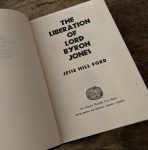 Set in the fictional town of Somerton, Tennessee, Jesse Hill Ford’s 1965 novel The Liberation of Lord Byron Jones follows a twisted story centered on divorce proceeding between a black undertaker LB Jones and his sultry wife Emma, who has been cheating on him with a white police officer named Willie Joe Worth. Caught in the mix are two white attorneys, the small town’s elder statesman Oman Hedgepeth and his nephew Steve Mundine. Rounding out the main cast is Mosby, a very large black man who ran away from the town when he was a boy after a white policeman named Stanley Bumpas beat him up badly. Mosby’s return to the town to get revenge on Bumpas is coincidental to the situation with the divorce and the lawyers, but he sets the town on edge when he accidentally kills a local grocer. The people of Somerton are mostly unaware of the potentially explosive details of an interracial affair that could soon go public, but they are very aware of the grocer’s unsolved murder and of the growing movement for Civil Rights.
The main character in the novel is Oman Hedgepeth, an aging scion of the old guard. He is a man that people – white and black – look to for answers, as both a man of resolve and a man of segregation. Oman has a problem, though: no heir. Hidden behind the outward persona of steady leadership in the small town are his deep bitterness and terrible loneliness. The woman who he loved as a young man left him before they could marry, and he never recovered emotionally. Without a wife or children, he looks to his moderately liberal nephew Steve Mundine to take over his law practice. Oman is a tortured soul who believes in the paternalistic and dehumanizing ideals of Jim Crow, but his long-kept secret involves a brief sexual affair with a married black housekeeper when he was in law school, a situation that was discovered by his landlady. This experience, when he was faced with a black person’s humanity, is something he cannot reconcile within his life’s experience. Now, in the story that the novel tells us, he is representing a black man who allegations of infidelity involve a married black woman sleeping with a white man. What makes the matter more complex for Oman are the peripheral facts: he got Willie Joe his job, Willie Joe has a wife and children, and it is a crime for a white man to have sex with a black woman. Oman knows that, if Willie Joe’s name comes out in court, he will lose everything – his job, his family – and probably go to prison (for something Oman himself has done).
That brings us to Steve Mundine. Steve has gone away from the South, met and married a beautiful woman named Nella, then came back to live in Somerton and work with Oman. The younger man has more progressive ideals, though he is still a realist who has been raised in the South. However, his wife is not. She does not understand Jim Crow, nor is she wiling to tolerate its manifestations the way her husband does. The couple is swimming in the turmoil of the Civil Rights-era South, and their differing responses to what they agree is wrong stresses their marriage. At this wife’s urging, Steve tries to intervene with LB Jones and convince him that he is in real danger, and he also uses his friendly connection to the local DA to facilitate some sort of truce that preserves the peace. Where Oman is a strong presence in the community, even while dealing with his own inner demons, Steve is clumsy and hapless as he tries to navigate the many tendrils of white supremacist culture. He must deal with an uncle and mentor with whom he doesn’t agree, with a wife who is unwilling to conform to the culture he has brought her into, and with a legal system whose ways he opposes but which he isn’t willing to fight. That is, until he finally has a reason to.
The title character Lord Byron Jones provides the catalyst for the conflict. He is a patient, thoughtful man with conservative values that could almost be called prudish, and he has married a woman who is younger and who does not share his sense of stoic propriety. Of course, being the local black funeral director, he is wealthier than the black people around him, and his living is not dependent on white people. Yet, he has a problem: his wild-at-heart wife is too much for him to handle, and since he is not satisfying her lust for life, she has begun an illicit sexual affair with a white man, a police officer no less. As the novel’s story begins, LB Jones has reached his breaking point and wants a divorce. His wife Emma is willing to let the situation go on as it is, but he says no. LB Jones comes to Oman Hedgepeth to serve as his attorney, since Emma has enlisted a white attorney of her own. Acting out of his progressive ideals, Steve urges Oman to take the case, even though Oman would rather not. Yet, LB Jones has put himself in a tight spot. In order to substantiate his allegations, it will be necessary for him to name the man who his wife is having an affair with. In a small Southern town in the mid-1960s, a black man will have to call out a married white police officer in open court, alleging that the white police officer has committed the crime of interracial sex. Everyone involved knows that this will be explosive and that LB Jones is putting himself in danger of being killed, if the secret will be protected.
Willie Joe Worth is a problem in own right. Along with Stanley Bumpas and the police department’s old desk clerk, they run a nightly racket that centers on false and unfair arrests of unwitting black people. Willie Joe and Stanley cruise the streets at night, finding black people to arrest; then when they are booked into the jail, the old clerk as a dual set of ledgers, one for real arrests and one for their sham arrests. This scheme yields some fines (which are taken as bribes) and also serves the purpose of maintaining the climate of fear necessary to exert control. Though Bumpas is not interested in it, Willie Joe also uses the false arrests to kidnap and sexually assault black women in the back seat of the patrol car. Willie Joe’s corruption is near-total, which leaves us no reasons to feel sorry for him as he faces the possibly of being outed. But he is also weak, and selfish, not like Stanley Bumpas who is a hardened killer.
This then brings us to Mosby, who adds a-whole-nother dimension to the story. When we meet him, he is arriving on a train, carrying a cigar box. He gets off the train and goes into the black part of town, stopping by a small grocery for what seems like an unusually large amount of food. He scarfs it all down outside, then realizes that he left the cigar box in the store. When he goes back inside, the old white grocer has his box – and its secret: that it contains a pistol – and half-taunts, half-threanens the big black man that he will call the law. Knowing he can’t have that, Mosby charges the old man, fights him, takes the cigar box back, and leaves. We find out that Mosby has come back to the small town after being away for many years. He was an orphan taken in by Mama Lavorn, who runs a nightclub and hotel. Years earlier, Mosby left town at the age of thirteen after the burly, racist police officer Stanley Bumpas beat him severely. (During the time of this story, Bumpas is an older man and the nighttime patrol partner of Willie Joe.) Mosby has returned with his gun to kill Bumpas, but since his altercation with the grocer, he has to stay unknown and out of sight, especially after the man dies from his injuries. As Mosby languishes with nothing to do, allowing the hubbub surrounding the grocer’s death to subside, he takes on the job – at Lavorn’s suggestion – of providing security for LB Jones. This is something that Jones doesn’t want. By the novel’s midpoint, Mosby goes to kill Bumpas, knowing that the old cop will be out working on his farm on that particular day. Mosby decides then from his hidden perch in the woods that putting his past behind him will be better than revenge, but that won’t be the end of it.
I won’t put any other spoilers about the plot or the ending here, since I would encourage people to read the novel for themselves. But I hope that anyone could see how someone, or everyone, involved in this story will be hurt by this confluence of factors, all of which are happening amid the backdrop of growing Civil Rights protests. Oman is the man who people in town rely on for evenhanded leadership, and he has allowed himself to become part of a big ol’ mess. People are telling him to fix it, to talk sense in LB or his wife or Willie Joe, but he can’t just fix it. As for Steve, the liberal ideals that he has presented to his wife have proven to be things he can’t live up to. Mosby has nothing to lose— unless he is recognized as Bumpas’s boy-victim from years ago, as the killer of the older grocer, or both. And LB, he is an otherwise reasonable, peaceful man walking straight into almost-certain death by threatening to expose a corrupt white police officer. This scenario – one that fits the paradigm of speculative fiction – has all trains heading toward each other on the same track, and by doing so, the story dives into some of the nuances, challenges, and hypocrisies of the Jim Crow South.
And that Jim Crow versus Civil Rights aspect of it is personified in the minor character Johnnie Price Burkhalter. Where Willie Joe Worth represents “white trash” – immoral, no-count, power-abusing – Johnnie Price is the affluent Southern racist. He is from generational wealth, owns the hardware store in town, and is part of the power structure. His is the voice of opposition to Civil Rights, evidenced by the story that he tells to Steve and Nella about thwarting a would-be protestor outside his store by brandishing a shotgun and threatening to use it. Steve does his best to tolerate the braggadocio, knowing that’s just who the man is, but Nella finds him utterly reprehensible. And he is, that and more: entitled, vulgar, haughty, self-righteous. White privilege has gone to his head. Without the Johnnie Price’s presence in the novel, Somerton’s overt symbols of bald racism would be Willie Joe and Stanley Bumpas, two working-class brutalizers. Johnnie Price Burkhalter, being from the wealthier, propertied class, adds that extra bit of oomph to our sense that the all of the bad guys really are bad.
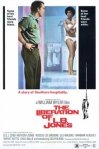 I stumbled across this novel while browsing the shelves in our college library, and having seen the 1970 movie adaptation already, I decided to pick it up and read it. The movie, which is pretty good, hovers between Southern history and blaxploitation, but the novel made me realize the film’s limitations. There is an emotional depth on the page that gets diminished on screen, and that visual medium with its limited time frame is forced to reduce the story to being a thriller. I should mention one word of warning for a modern reader: the text of the novel, especially the dialogue, is littered with racial slurs. The racial tensions are there in the film, as are the complexities of the plot, but both the emotional depth and the number of times that the N-word is used are reduced sharply in the adaptation.
Jesse Hill Ford, the novel’s author, is seldom discussed today outside of Southern literature and Southern history circles. He was born in Troy, Alabama then raised in Nashville and educated at Vanderbilt. The Liberation of Lord Byron Jones garnered him positive attention as a writer in the mid- to late 1960s, and the film adaptation added to that reputation, but a tragic event followed that changed his fortunes. In 1970, he killed a young black man in what he claimed was self-defense; he was acquitted of murder charges in July 1971 but by a jury of eleven whites and one black. The decades that followed had highs and lows, and Ford took his own life in 1996. Just this novel is not easily categorized, packaged, or summed up, the author’s own life seems to have been marked by similar complexities.
